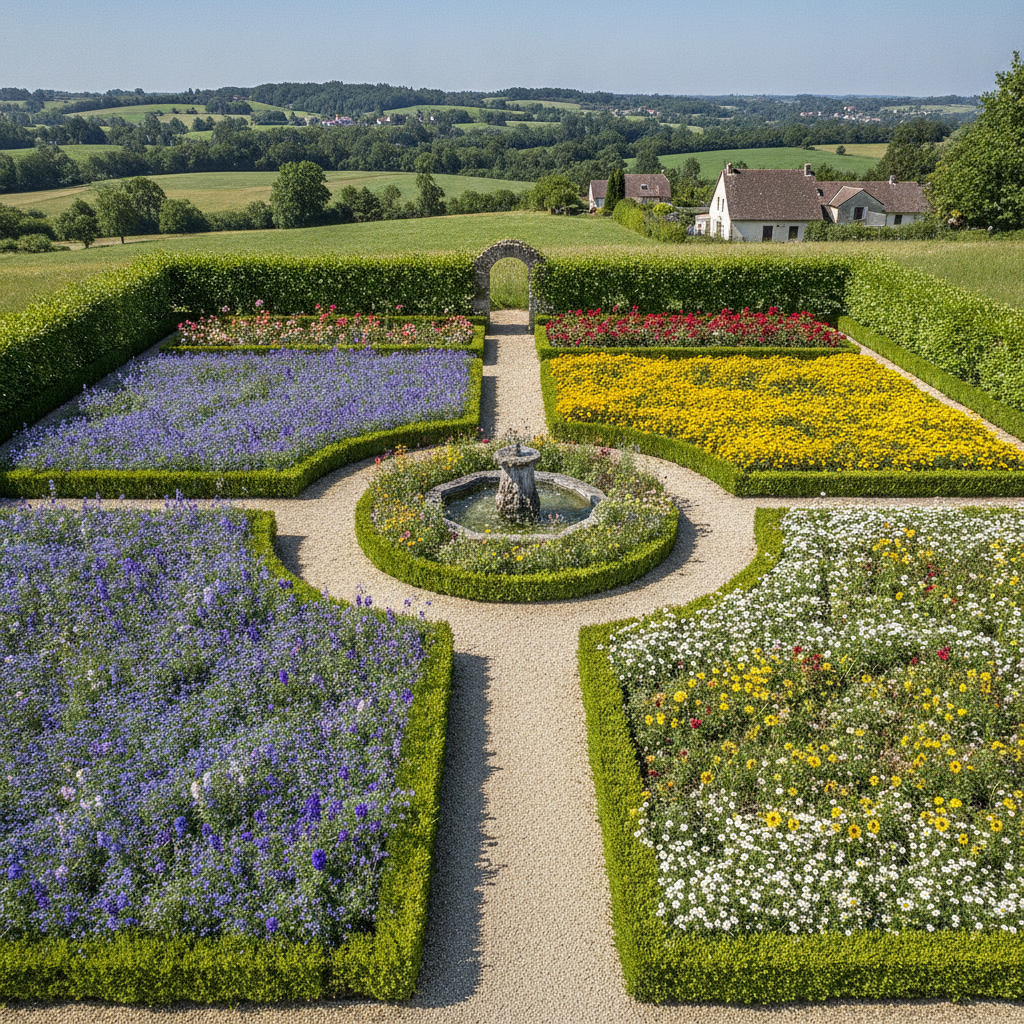
A unique artistic endeavor in Maine, which began five years ago, transforms the former site of a writer’s home into an 1,800-square-foot floral garden. Artist Carly Glovinski, during her artist-in-residence tenure at the Surf Point Foundation, discovered the overgrown terrace where the house known as Wild Knoll once stood. The house, which was home to prolific poet and novelist May Sarton for over two decades, had been demolished in 2020, a year before Glovinski’s discovery.
Glovinski, who started her career as a painter, taught herself gardening to establish the Wild Knoll Foundation Garden. She utilized the original architectural drawings and blueprints of the house as a design guide, approaching the project with an artistic sensibility. Each room of the former house is now represented by a distinct color scheme of flowers, creating a color-blocking effect. For instance, the living room area is planted entirely with yellow flowers, and another section features pure purple blooms. Descriptions from Sarton’s 1977 memoir, The House by the Sea, also guided the restoration of the terrace garden.
The project has evolved into a multi-faceted work, blending visual art with literary themes and embracing unpredictability. Glovinski refers to it as a living work and a large-scale piece of aleatoric art. It also serves as a place of inspiration and restoration, echoing the solace Sarton found in the original home and its gardens. The artist notes the tension between an artist’s need for solitude during creation and the desire for community support, a theme amplified by the garden’s dual nature as a sanctuary and a gathering space.
Community involvement has become a significant aspect of the garden’s evolution. Glovinski engages in seed sharing and regularly divides plants, holding an annual spring sale for the community. Other local gardeners and garden clubs contribute their knowledge and assistance, leading to constant changes in the living exhibit. Unpredictable elements like weather, pests, and plant diseases also influence the garden’s dynamic landscape. Approximately two-thirds of the plants are perennials introduced by Glovinski, with about half being native species. She also salvaged giant peonies and hydrangeas from Sarton’s original garden.
The garden’s season runs from mid-April to the end of October. Visits can be arranged by appointment through the Surf Point website. The Surf Point Foundation also hosts regular community events, including lectures, performances, exhibits, and nature walks, further integrating the garden into the local cultural landscape. This ongoing project demonstrates a unique approach to art, embracing process and change over fixed outcomes.
Filed under: Aiken SC Home & Garden News