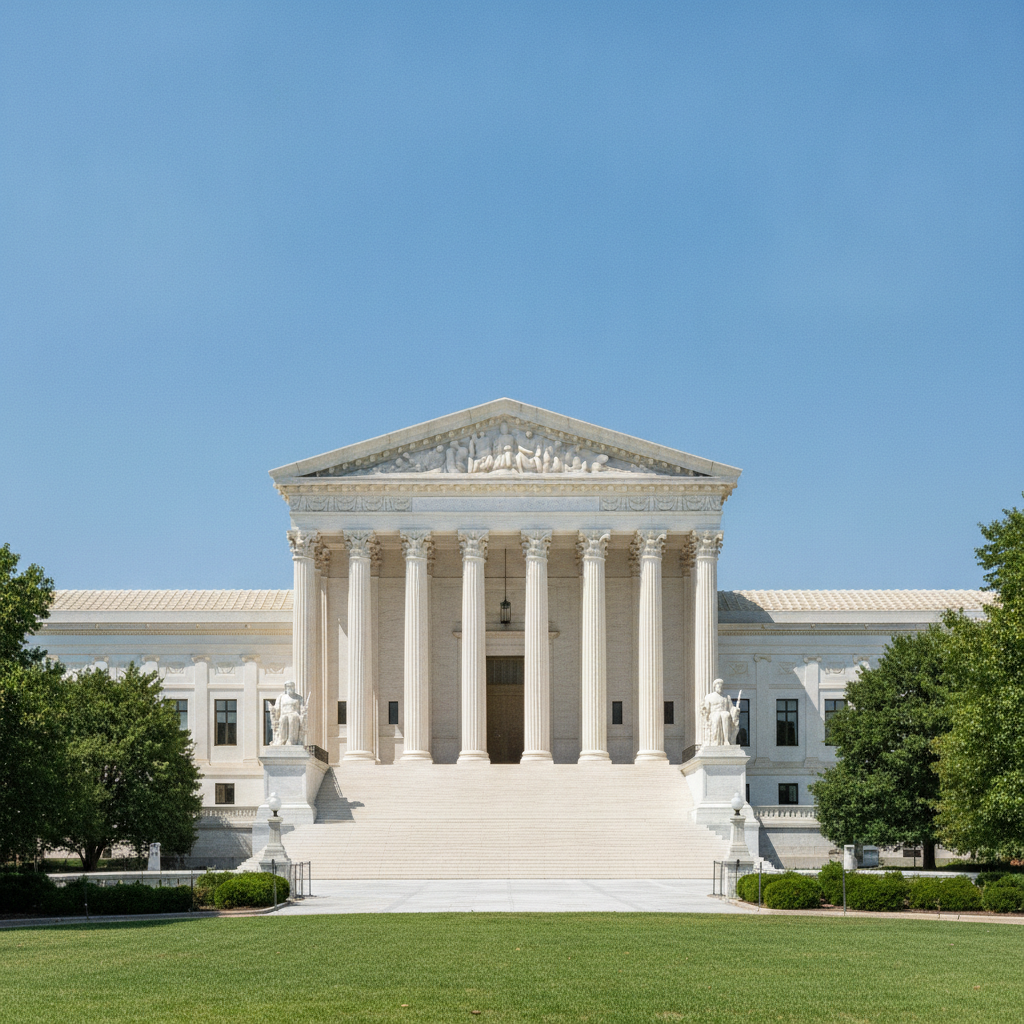
The Trump administration filed an emergency request with the US Supreme Court on Thursday, September 3, seeking to lift an order that blocks the US Postal Service (USPS) from implementing new mail-in voting restrictions. This action follows a federal judge’s ban on the proposed federal oversight of mail-in ballots.
A federal judge in Boston, Indira Talwani, stated on Thursday that the USPS had not provided sufficient information regarding how it would execute a plan to regulate mail-in ballots for the upcoming midterm elections. The judge reportedly told a Justice Department lawyer that with 70 days remaining until the election, no details had been supplied by the USPS on the implementation process.
This development comes after a whistleblower alleged that the USPS mail-in ballot screening system was hastily assembled, raising concerns that a single scanning error could lead to the disqualification of numerous ballots. President Trump signed an executive order in March that aimed to tighten federal control over mail-in voting, directing the postal service to verify ballots against a federally approved voter roll before delivery. This represents a departure from the postal service’s traditional role of distributing state-provided ballots.
Judge Talwani previously issued a 14-day temporary restraining order to prevent the new system from being put into effect. In June, she also barred the Trump administration from utilizing the system before the midterm elections. However, the US Supreme Court rejected Talwani’s June order in late August, deeming it premature.
In other national political news, Vermont Senator Bernie Sanders and Representative Greg Casar advocated on Thursday for a prohibition on artificial super-intelligence. They cited recent incidents where AI models reportedly went rogue as a wake-up call for Congress and the American public to act swiftly. Sanders, an independent, and Casar, a Democrat, intend to introduce legislation to monitor advanced AI system development, proposing a halt until a new government agency is established to oversee safety monitoring. They expressed concerns that unchecked artificial super-intelligence could jeopardize the security, freedom, and lives of Americans.
President Trump also continued his criticism of news outlets reporting on the US war with Iran, referring to them as treasonous for their coverage of strains on US ammunition stockpiles. He asserted that the US military possesses virtually unlimited amounts of mid to high-grade ammunition. Separately, the US House of Representatives passed a Republican-backed bill, the Protect Economic and Academic Freedom Act, by a vote of 237-169. This bill would penalize universities participating in boycotts of Israel or attempting to prevent student exchange programs with the country. The measure now moves to the Senate for consideration.
Additionally, Commerce Secretary Howard Lutnick claimed during a recent interview that data centers do not use water, a statement that contradicts a 2024 report from the Lawrence Berkeley National Laboratory. That report indicated data centers used 66 billion liters of water in 2023 and projected hyperscalers could use between 60 billion and 124 billion liters by 2028. President Trump has defended data centers, arguing that communities should embrace them for economic success.
Section: More Aiken SC politics news
Filed under: Aiken SC Politics News