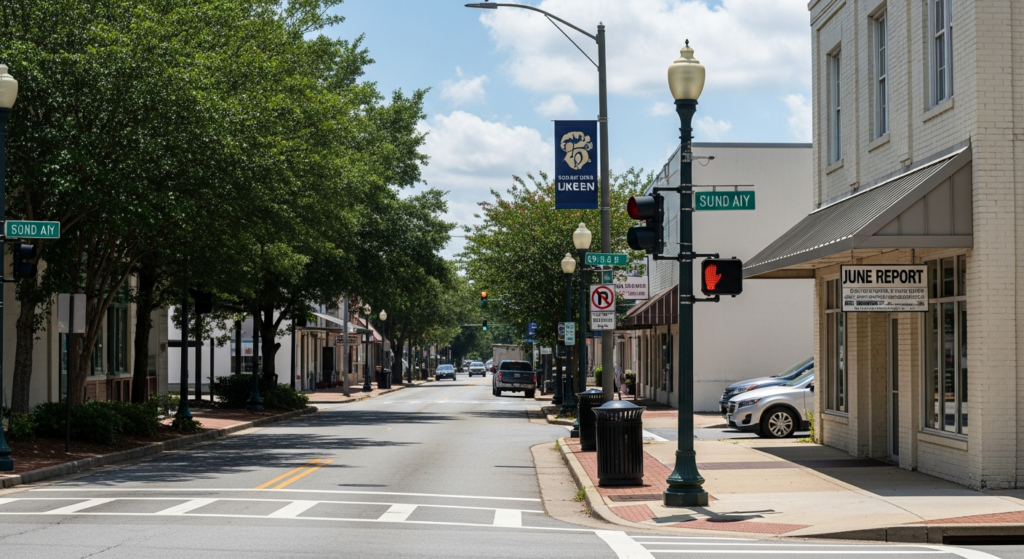
National labor-market reporting for June indicated a slowdown in job growth, a development that has prompted a significant shift in market expectations regarding the timing and trajectory of future interest-rate decisions by the Federal Reserve. This recalibration of forecasts has, in turn, influenced the behavior of Treasury yields and broader stock-market positioning, creating a nuanced economic backdrop as the summer progresses.
The latest jobs data, released earlier this month, suggested a moderation in the pace of hiring across the country. While the specifics of the report pointed to continued, albeit slower, expansion in certain sectors, the overall picture was one of a cooling labor market. This trend is closely watched by economists and investors alike, as it provides key insights into the Federal Reserve’s potential actions on monetary policy. A sustained slowdown in job creation could signal that inflationary pressures are easing, potentially giving the Fed more flexibility to adjust interest rates.
Following the release of the June figures, market analysts began to adjust their projections for when and how aggressively the Federal Reserve might alter its benchmark interest rate. Prior expectations, which had largely anticipated a more prolonged period of higher rates, have now begun to factor in the possibility of earlier or more substantial rate adjustments, depending on how subsequent economic indicators unfold. This shift in sentiment is not merely an academic exercise; it has tangible consequences for financial markets.
Treasury yields, which serve as a foundational benchmark for a wide array of lending rates, reacted to the revised outlook. When expectations for future interest rates change, the yields on government bonds typically move in response, reflecting the market’s collective assessment of future borrowing costs and economic growth. Similarly, stock markets often respond to shifts in interest-rate expectations, as these changes can influence corporate profitability, investment decisions, and the overall valuation of equities. Companies with significant debt loads, for instance, may see their financial outlook improve if borrowing costs are expected to decline, while growth-oriented firms might find it easier to secure capital for expansion.
For the Aiken area and the broader Central Savannah River Area (CSRA), these national economic currents carry local implications. Major employers in Aiken County, such as Savannah River Nuclear Solutions, Bridgestone Americas, and Kimberly-Clark, operate within a national and global economic framework. While federal contracts at the Savannah River Site may offer some insulation from immediate market fluctuations, manufacturing operations like those of Bridgestone and Kimberly-Clark are more directly exposed to shifts in consumer demand and industrial investment, which can be influenced by interest rates and overall economic growth. A cooling national job market could lead these large employers to re-evaluate hiring plans or investment strategies, potentially affecting job seekers in Aiken.
Small businesses, a vital component of Aiken’s economy, particularly in areas like the Downtown Historic District and along Whiskey Road, are often more directly sensitive to changes in interest rates. For these enterprises, borrowing costs for expansion, inventory, or operational capital are a critical factor. A market expectation of lower rates could provide a more favorable environment for small business growth and investment, potentially stimulating local commerce and job creation within the city of Aiken. Conversely, uncertainty about future rates can lead to caution among entrepreneurs.
The employment landscape for Aiken residents could also see adjustments. Institutions like Aiken Regional Medical Centers and the Aiken County Public School District are significant employers, and while their hiring needs are often tied to local demographics and public funding, the broader economic climate can still play a role in their operational budgets and staffing levels. Graduates from local colleges such as the University of South Carolina Aiken and Aiken Technical College enter a job market shaped by these national trends, influencing the availability and competitiveness of entry-level positions across various sectors in Aiken and beyond.
Household borrowing costs represent another direct link between national monetary policy and daily life in Aiken. Interest rates on mortgages, car loans, and credit cards are all influenced by the Federal Reserve’s actions and market expectations. For homeowners in neighborhoods like Woodside Plantation or Houndslake, or prospective buyers across Aiken County, shifts in mortgage rates can significantly impact affordability and purchasing power. Similarly, changes in rates for auto loans and consumer credit can affect household budgets and discretionary spending, influencing local retail and services.
### Why it matters in Aiken
The national jobs report and the subsequent recalibration of interest rate expectations have tangible consequences for the economic fabric of Aiken. For small business owners operating in the vibrant Downtown Historic District, the prospect of altered borrowing costs directly impacts decisions about expansion, hiring, and inventory management. Changes in the broader economic climate can influence consumer spending patterns, affecting local retail and service industries. Furthermore, for residents considering major purchases or managing existing debt, shifts in interest rates on mortgages, car loans, and credit cards directly impact their financial well-being, underscoring how national economic data translates into everyday realities for families and businesses throughout Aiken County.