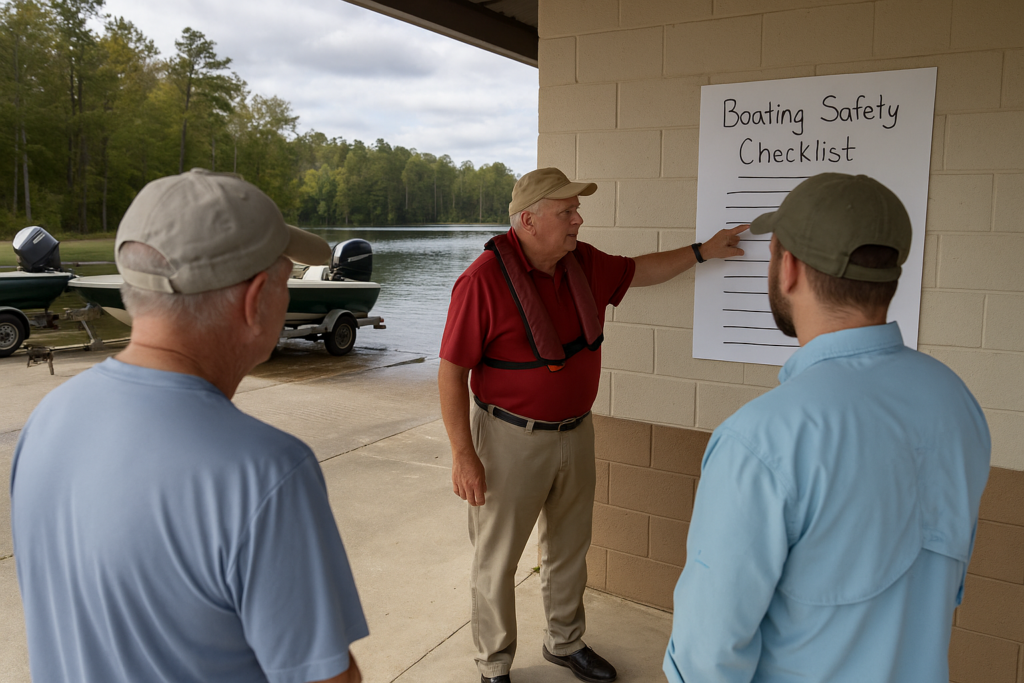
Anglers heading out onto the waters of Aiken County and the surrounding Central Savannah River Area should prioritize safety with a thorough pre-trip checklist. While the allure of a successful catch can be strong, neglecting basic boating safety can lead to dangerous situations.
Vessel Check: Before launching, inspect your boat for any visible damage. Ensure the hull is sound, and there are no leaks. Check that all essential equipment is present and in working order. This includes navigation lights, which are crucial if your outing extends into dusk or dawn, and a sound-producing device like a horn or whistle.
Required Safety Equipment: Federal and state regulations mandate specific safety gear. For recreational boats, this typically includes:
* Personal Flotation Devices (PFDs): At least one wearable PFD for each person on board, plus one throwable PFD (like a ring buoy or cushion). PFDs should be Coast Guard-approved, in good condition, and readily accessible. Children under 13 must wear a PFD at all times while on the vessel.
* Fire Extinguisher: Boats with an inboard engine, or those carrying portable fuel tanks, require a U.S. Coast Guard-approved fire extinguisher. Check its charge and expiration date.
* Visual Distress Signals (VDSs): These can include flares, flags, or electric lights. Ensure they are not expired and are stored in a dry place.
* Ventilation Systems: For boats with enclosed compartments or built-in fuel tanks, proper ventilation is critical to prevent the buildup of explosive fumes.
* Backfire Flame Arrestor: Required on gasoline engines to prevent ignition of fuel vapors.
Navigation and Communication: Familiarize yourself with the waterways you plan to navigate. Local bodies of water like Langley Pond, Boyd Pond, and stretches of the Savannah River present unique conditions. Carry a map or chart of the area, especially if you are unfamiliar with it. A reliable communication device, such as a fully charged cell phone or a marine radio, is essential for emergencies. Ensure you know how to contact emergency services in Aiken County.
Weather Awareness: Always check the weather forecast before departing and monitor conditions while on the water. Summer weather in Aiken can change rapidly, with the potential for sudden thunderstorms and strong winds. Heed any weather advisories and be prepared to return to shore if conditions deteriorate.
Operator Competence: Ensure the person operating the boat is experienced and understands safe boating practices. In South Carolina, individuals born after July 1, 1976, must have a Boating Safety Education Card to operate a watercraft with a motor of 15 horsepower or more. This card can be obtained by completing an approved boating safety course.
Pre-Departure Routine: Beyond the equipment check, a routine before leaving the dock can prevent oversights. This includes:
* Fuel: Ensure you have sufficient fuel for your planned trip, plus a reserve.
* Bilge Plug: Confirm the bilge plug is in place before launching.
* Engine: Run the engine briefly to ensure it is operating correctly.
* Emergency Plan: Discuss with your passengers where safety equipment is stored and what to do in an emergency.
Adhering to these safety measures can significantly reduce the risk of accidents and ensure that your time spent fishing on Aiken’s lakes and rivers is both productive and secure. The goal is to return home safely after a day on the water.