As temperatures rise in the Central Savannah River Area, ensuring home cooling systems are operating at peak efficiency becomes a priority. Ceiling fans, a common feature in many Aiken homes, play a significant role in circulating air and creating a cooling effect. Proper maintenance can enhance their performance and longevity.
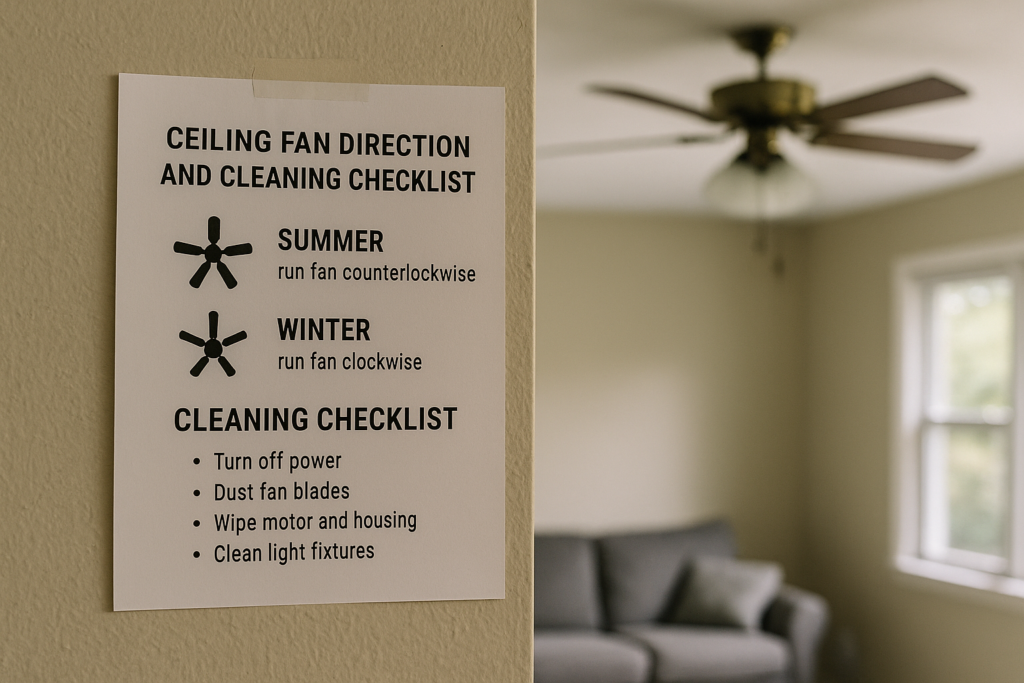
A fundamental aspect of ceiling fan operation is blade direction. During the summer months, fans should be set to rotate counterclockwise. This setting pushes air downwards, creating a “wind chill” effect that can make a room feel several degrees cooler. This allows air conditioning units to be set at a higher temperature, potentially saving on energy costs.
To check the direction, stand directly beneath the fan while it is running on a medium speed. If you feel a downdraft, the fan is set correctly for summer cooling. If you feel an updraft, the direction needs to be reversed. Most ceiling fans have a small switch located on the motor housing that allows for this adjustment. It is advisable to turn the fan off and unplug it before attempting to change the direction.
Beyond direction, regular cleaning of ceiling fan blades is essential. Dust accumulation on blades can reduce airflow efficiency and, in some cases, cause the fan to become unbalanced, leading to wobbling. A simple dusting with a microfiber cloth or a vacuum cleaner attachment can remove this buildup. For more stubborn grime, a damp cloth can be used, but care should be taken to ensure the motor housing does not get wet. It is recommended to clean the blades at least once every few months, and more frequently if dust is a significant issue in the home.
Unbalanced blades are another common issue that can affect fan performance and create noise. This can be caused by bent blades, loose hardware, or uneven dust accumulation. If a fan wobbles, first check that all blade screws and light fixture screws are tight. Ensure the ceiling mount is secure. Many ceiling fan kits include a balancing kit with small weights that can be attached to the blades to correct wobble. Following the instructions provided with the kit is crucial for proper balancing.
Homeowners should also periodically inspect the fan’s mounting hardware to ensure it is securely attached to the ceiling. A loose mounting can lead to instability and potential safety hazards. For any issues that cannot be easily resolved, or for more complex maintenance needs, consulting a qualified electrician or HVAC professional is recommended. Adapting these maintenance practices to local conditions and seeking professional guidance when necessary can help ensure ceiling fans contribute effectively to home comfort throughout the warmer seasons.