A foundational guide to golf etiquette, last updated in March 2013, provides a framework for players aiming to enhance their experience, maintain course conditions, and ensure safety across golf courses, including those throughout Aiken and the wider Central Savannah River Area.
The manual introduces a range of practices, from pre-game preparations to on-course conduct and post-round responsibilities. These guidelines are designed to foster a respectful environment for all participants and preserve the integrity of the playing grounds.
Dress and Appearance on the Course
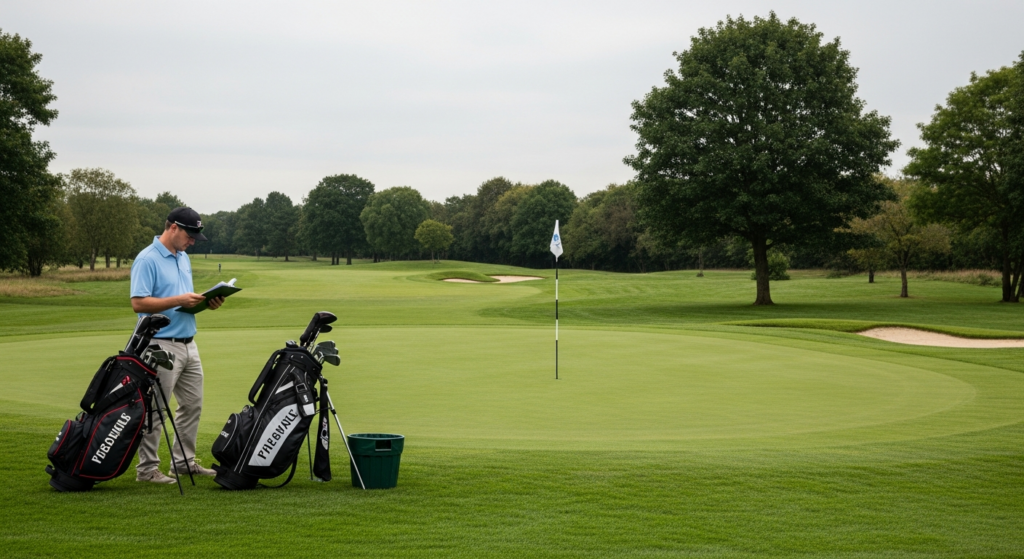
One of the initial points of etiquette addresses appropriate attire. Golfers are advised to check the specific dress codes of individual courses in advance, as policies can vary. Generally, collared shirts and slacks are considered suitable for the course. Conversely, the manual explicitly recommends avoiding attire such as jeans, tank tops, short shorts, and T-shirts. This guidance extends beyond the greens to clubhouses and practice facilities, underscoring a tradition of decorum within the sport. Adhering to these standards contributes to the overall atmosphere of the club and respects the traditions of the game.
Pace of Play and Course Flow
Maintaining an appropriate pace of play is crucial for the enjoyment of all golfers. The manual suggests that most 18-hole courses can be completed in four hours or less by a group of four players, provided they keep pace with the group ahead. A key directive is to avoid falling more than one shot behind the preceding group. If a group finds itself lagging, the etiquette dictates inviting the following group to play through. This practice ensures that the course remains fluid and prevents unnecessary delays for others.
To facilitate a good pace, players are encouraged to adopt ‘ready golf,’ meaning that players hit when they are ready, rather than strictly adhering to the furthest-from-the-hole convention. Limiting practice swings and being prepared to hit when it is one’s turn also contribute significantly to efficiency. When a ball might be out of bounds or lost outside a water hazard, hitting a provisional ball is recommended to save time. Furthermore, the manual specifies abandoning a search for a lost ball after five minutes, another measure to keep play moving.
Conduct During Play
Respectful behavior on the course is paramount. Golfers are instructed to remain motionless and quiet while others are making their strokes, ensuring no distractions. Maintaining composure, refraining from abusive behavior, and avoiding foul language are also emphasized. These guidelines promote a positive and sportsmanlike atmosphere, which is fundamental to the spirit of golf. Cell phone policies vary by course; where phones are permitted, the manual recommends keeping them on vibrate to minimize disruption.
Safety Protocols
Safety is a critical component of golf etiquette. Players must always ensure that no one is within range of their club swing before taking a shot. Similarly, waiting until players ahead are well out of range before hitting is a non-negotiable rule. In instances where a ball in motion might strike someone, golfers are required to shout “FORE!” loudly and clearly to alert those potentially in danger. These precautions are vital to prevent accidents and ensure the well-being of everyone on the course.
Course Maintenance and Preservation
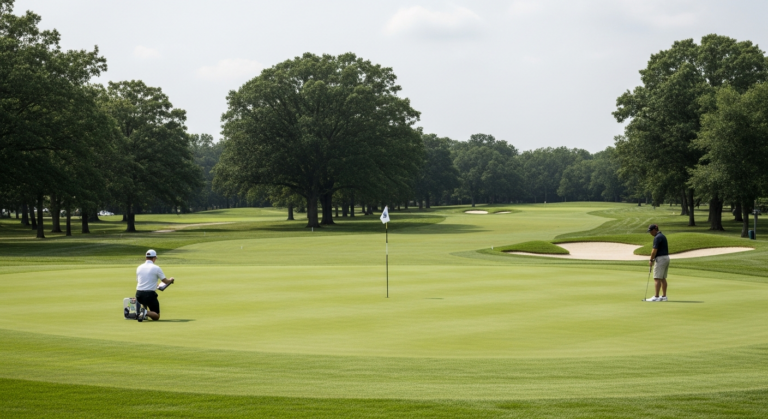
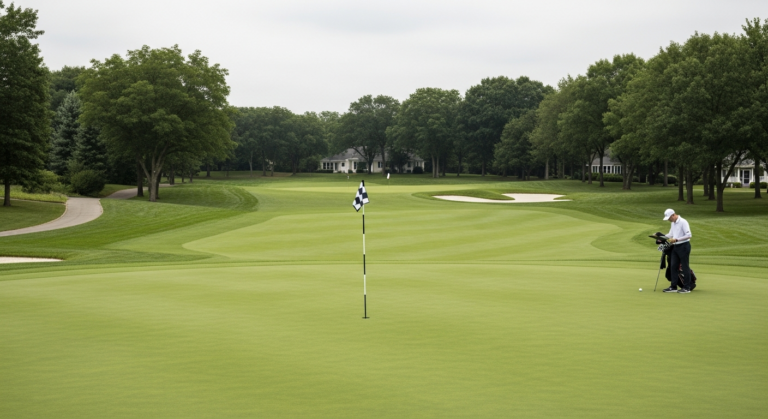
Golfers bear a shared responsibility for maintaining the condition of the course. The manual provides specific instructions for preserving the playing surface: replacing divots, carefully raking bunkers after play, and repairing ball marks on the greens. Players should also avoid causing damage to greens and holes, such as by dragging clubs or dropping bags. Adhering to cart policies, including the ’90-degree rule’ where carts are restricted to paths and only allowed to cross fairways at a 90-degree angle, is essential. When carts are restricted to paths, players are advised to take multiple clubs to their ball to avoid unnecessary trips back to the cart.
Understanding Golf Terminology and Rules
Familiarity with basic golf terminology and rules is integral to proper etiquette and play. The manual defines several key terms:
* Bunker: A hazard consisting of a prepared area of ground, often a hollow, from which turf or soil has been removed and replaced with sand or the like.
* Casual Water: Any temporary accumulation of water on the course that is not in a water hazard and is visible before or after the player takes a stance. Snow and natural ice, other than frost, are casual water.
* Ground Under Repair (GUR): Any part of the course so marked by an authorized committee or as otherwise defined in the rules. Relief is usually granted from GUR.
* Line of Putt: The line that the ball is expected to take after a stroke on the putting green.
* Out of Bounds: Ground from which play is prohibited. A ball is out of bounds when all of it lies out of bounds.
* Putting Green: The area of the hole being played that is specially prepared for putting or otherwise defined as such.
* Stroke: The forward movement of the club made with the intention of striking at and moving the ball.
* Teeing Ground: The starting place for the hole to be played. It is a rectangular area two club-lengths deep, the front and sides of which are defined by the outside limits of two tee-markers.
* Through the Green: The whole area of the course except the teeing ground and the putting green of the hole being played and all hazards on the course.
Understanding these definitions allows golfers to navigate the course correctly and apply the rules fairly. Knowing when and how to hit a provisional ball, for example, or the five-minute limit for searching for a lost ball, are practical applications of these rules that contribute to efficient play.
Why it matters in Aiken
For golfers in Aiken, a city with a rich equestrian heritage and a strong appreciation for outdoor recreation, adherence to these etiquette guidelines is particularly relevant. Aiken is home to historic courses like the Palmetto Golf Club, founded in 1892, which embodies a long-standing tradition of the sport. Additionally, neighborhoods such as Woodside Plantation, Houndslake, and Cedar Creek feature prominent golf communities and courses that attract residents and visitors alike. Following established etiquette ensures that these local institutions and residential courses remain pristine and enjoyable for everyone. It upholds the high standards expected in Aiken’s golf scene, contributing to the city’s reputation as a premier destination for the sport and enhancing the experience for all who play here.