Golf courses across Aiken and the wider Central Savannah River Area are reinforcing fundamental guidelines for player conduct, course maintenance, and safety, particularly as the summer season encourages more activity on the greens. These principles, often referred to as the ‘golden rules’ of golf, are designed to ensure an enjoyable experience for everyone while preserving the integrity of the playing surfaces.
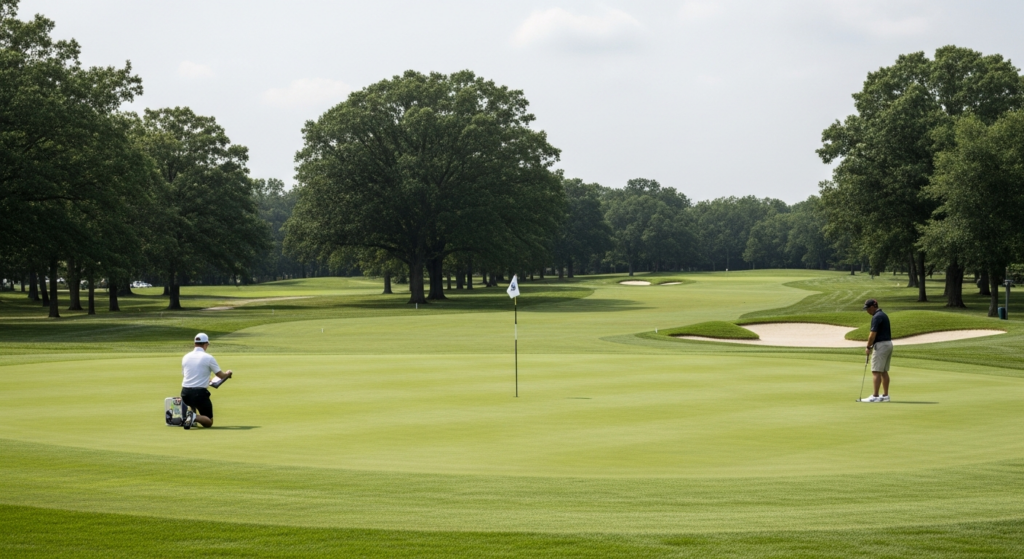
Central to these guidelines is basic course etiquette, which dictates respectful behavior towards fellow golfers. Players are expected to maintain silence and stillness when another player is preparing to strike the ball, avoiding any movement, talking, or shouting that could cause distraction. This extends to not walking in front of a player or casting a shadow across their putting line. A key tenet involves staying outside a player’s line of sight during their shot. After a round or match, a customary handshake with opponents and playing partners, often accompanied by the removal of one’s cap, signifies sportsmanship and respect. Accepting corrections from more experienced players or course marshals is also part of this foundational etiquette, fostering a learning environment.
Avoiding slow play is another critical component of golf course management. Golfers are encouraged to keep pace with the group ahead of them, a practice that contributes to a smooth flow across the entire course. Efficiency can be improved by planning the next shot while walking to the ball, minimizing delays once it is a player’s turn. The concept of “ready golf” is promoted, where players hit their shot when ready, rather than strictly adhering to the furthest-from-the-hole rule, except in match play where traditional rules apply. Promptly clearing the green after putting out is essential to allow the following group to approach. When multiple balls are lost, groups should split up to search, and if a search extends beyond a reasonable time, faster groups should be waved through without hesitation. Furthermore, bags and trolleys should be moved to the side of the green closest to the next tee, preventing congestion around the putting surface.
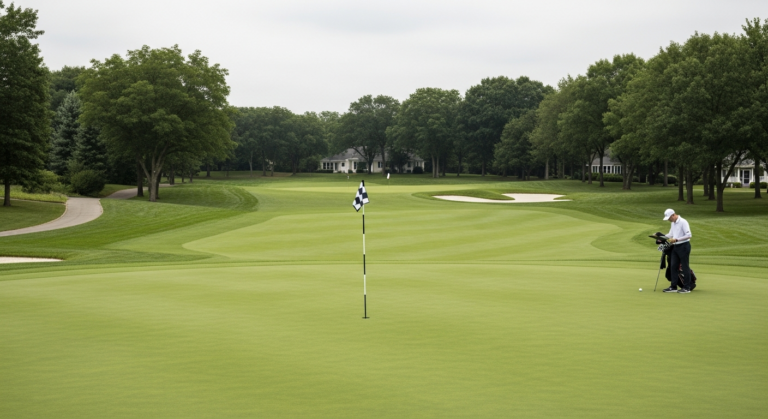
A specific procedure for the 8th hole on some courses, known as a call-up hole, illustrates the emphasis on pace. If a group is on the 8th green, has not yet begun putting, and the following group is waiting on the 8th tee, the group on the green should leave the flagstick in, stand clear, and wave the waiting group through to tee off. They can then complete their putting after the tee shots have been played, ensuring continuous movement.
Protecting the course is paramount for maintaining high standards of play. Golfers are responsible for repairing pitch marks on greens, which are indentations caused by the impact of a ball. These should be carefully mended to restore the putting surface. Similarly, divots taken from fairways should be replaced. On tee boxes, however, divots are typically repaired using grass seed provided, rather than attempting to replace the small pieces of turf. To prevent damage, bags and trolleys should be kept off tee boxes and greens entirely. During certain conditions, such as winter, golfers must adhere to white lines and arrows indicating areas where trolleys or buggies are restricted, sometimes requiring the use of winter wheels. Balls should be lifted from holes by hand, avoiding the use of a putter to scoop them out, which can damage the cup. Utilizing designated steps or paths instead of walking on banks helps prevent erosion and turf damage. When a ball lands in ground under repair or on a wrong green, players are expected to take a free drop as specified by local rules or signage. Adherence to all signage regarding buggy and trolley use is mandatory, ensuring the course remains in optimal condition.
Playing the correct ball is a fundamental rule to prevent penalties and maintain fair play. Golfers are advised to mark their ball with distinctive patterns or initials before starting a round. Before teeing off, it is good practice to declare the specific ball being played. If a provisional ball is hit, it must be clearly distinguishable from the original ball, and its provisional status declared. Before striking any ball, players should always confirm it is their own. Playing the wrong ball results in a two-stroke penalty in stroke play or loss of hole in match play, requiring the player to replace their correct ball at its original position. Spare balls should only be introduced into play if the original is certainly lost, not merely misplaced.
Safety on the course is a shared responsibility. Before taking any practice swings, golfers must check that no one is standing behind them. Shots should only be taken when it is absolutely certain that no other golfers, walkers, or spectators are within range. Maintaining a distance of at least two club lengths from someone who is playing is a general safety measure. Players must wait until the group ahead is well out of range before hitting, especially on longer holes. Particular attention should be paid to cross-over holes, where fairways or playing lines intersect. On the 5th hole, specifically, players must ensure the game ahead has cleared before teeing off. If a ball is hit and may potentially strike someone, or if it disappears from view in a populated area, the player must immediately and loudly shout “Fore!” Conversely, upon hearing “Fore!”, golfers should duck and cover their heads without delay.
Common rules issues often arise during play, and understanding them can prevent unnecessary penalties. For a lost or out-of-bounds ball, if no provisional was played, the player must replay from the previous position with a one-penalty stroke. Generally, a ball should not be lifted or cleaned unless specific winter rules are in effect on the fairway or if the ball is on the green. Touching bunker sand before taking a shot is prohibited. For an unplayable ball, a player may take a drop within two club lengths, no nearer the hole, incurring a one-penalty stroke. Improving a lie or swing by treading down live vegetation or moving branches is not permitted, as it alters the natural conditions of the course.
Beyond the technical rules, the spirit of the game emphasizes a sense of humor and the ability to remember good shots, rather than dwelling on mistakes. Golfers are encouraged to ask playing partners or the clubhouse staff for clarification when in doubt about a rule or procedure. Ultimately, the most important rule is to enjoy the game. This holistic approach to golf ensures that the experience remains positive and respectful for all participants on courses like the historic Palmetto Golf Club and the expansive layouts found in communities such as Houndslake and Woodside Plantation in Aiken.
Why it matters in Aiken
Aiken boasts a rich equestrian and golf heritage, with institutions like the Palmetto Golf Club, founded in 1892, standing as a testament to the sport’s deep roots in the community. The consistent application of golf etiquette and course preservation guidelines is crucial for maintaining the high standards and reputation of Aiken’s golf facilities. These practices ensure that local courses remain pristine and enjoyable, not only for residents but also for visitors drawn to the area’s renowned golf scene. Adherence to these guidelines directly impacts the quality of play, the longevity of the courses, and the overall experience for members and guests at clubs throughout Aiken County, reinforcing the city’s standing as a premier destination for the sport.