Accessing private land for hunting requires careful consideration and clear communication, forming a critical component of responsible outdoor pursuits. A practical framework for hunters emphasizes proactive engagement with landowners and a thorough understanding of property rights and expectations.
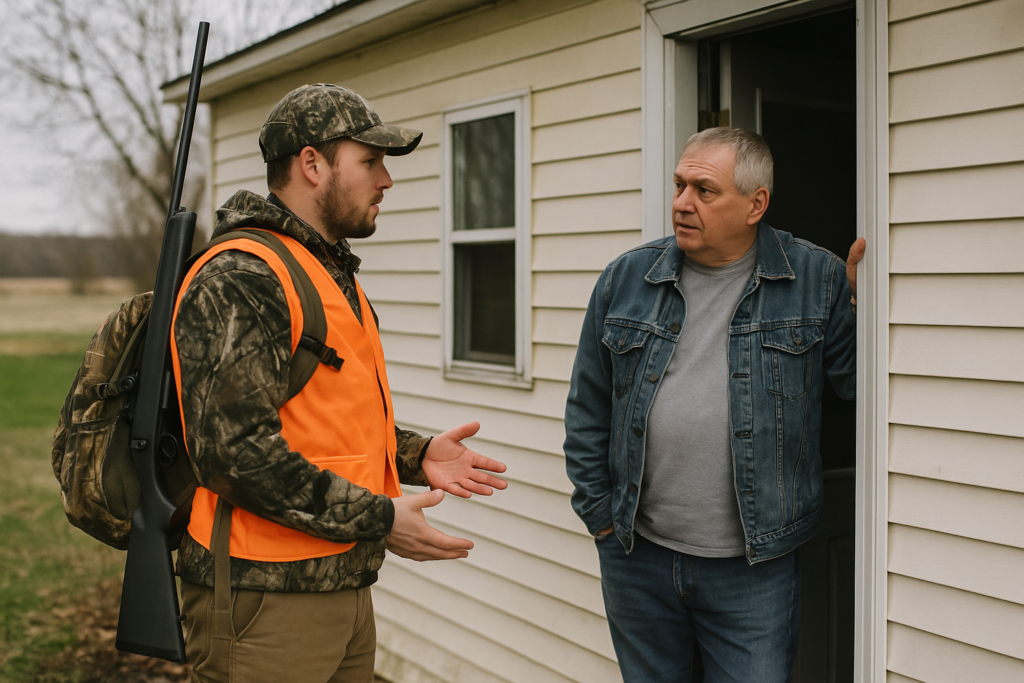
Before venturing onto any private property, hunters should prioritize obtaining explicit permission. This involves initiating contact well in advance of the hunting season. Early communication allows ample time for discussion and avoids last-minute complications. When making contact, it is advisable to offer written contact information, such as a name, address, and phone number. This gesture demonstrates seriousness and provides a tangible record of the agreement.
Confirming property boundaries is another essential step. Understanding the exact limits of the permitted hunting area prevents accidental trespass onto adjacent properties or areas where hunting is not allowed. This may involve consulting property maps, seeking clarification from the landowner, or even physically walking the boundaries with the property owner if feasible. Such diligence ensures that hunting activities remain within the agreed-upon scope and respects the rights of neighboring landowners.
Beyond the logistical aspects of permission and boundaries, ethical considerations play a significant role. Hunters are expected to act as stewards of the land, respecting the property and any livestock or crops present. This includes adhering to any specific rules set by the landowner, such as designated parking areas, times of access, or restrictions on certain types of game or hunting methods. Leaving the property in the same or better condition than it was found is a fundamental principle of ethical hunting.
The framework suggests that hunters should adapt these general principles to local regulations and conditions. State wildlife agencies and local hunting organizations often provide guidance on best practices and legal requirements for hunting on private land. Understanding these specific rules, which can vary significantly by region, is crucial for compliance.
Budgets can also influence how hunters approach private land access. Some landowners may charge a fee for hunting access, while others may grant permission based on a shared interest in wildlife management or conservation. Hunters should be prepared to discuss and agree upon any financial arrangements upfront.
Seeking professional guidance can also be beneficial. Wildlife biologists, conservation officers, or experienced hunting guides can offer insights into landowner relations and ethical hunting practices. Their expertise can help hunters navigate complex situations and build positive, long-term relationships with private landowners.
Ultimately, the successful and ethical pursuit of hunting on private land hinges on a foundation of respect, clear communication, and a commitment to understanding and adhering to both legal and ethical standards. This approach not only ensures legal compliance but also fosters goodwill between hunters and landowners, contributing to the long-term sustainability of hunting access.