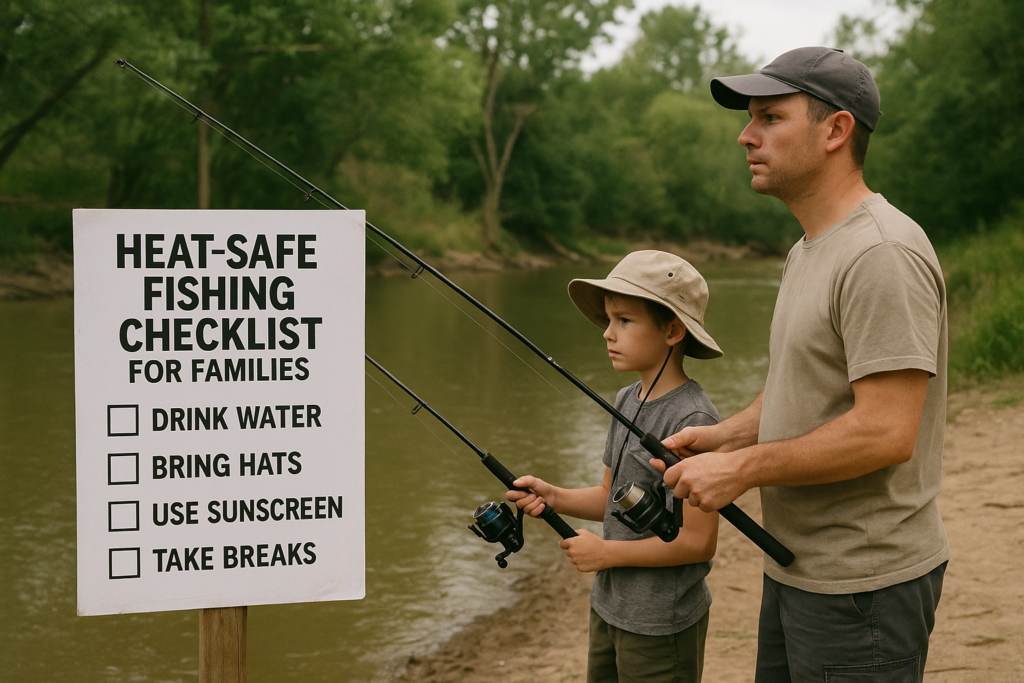
As the summer season continues, families looking to enjoy fishing excursions can benefit from a structured approach to safety, particularly concerning heat exposure. A “Heat-Safe Fishing Checklist for Families” provides a framework that can be adapted to local conditions and regulations.
Central to any outdoor activity in warm weather is proper hydration. Anglers should ensure they pack an ample supply of water, significantly more than they anticipate needing. This includes water for drinking and for cooling off. Beyond water, other fluids like sports drinks can help replenish electrolytes lost through perspiration. It is advisable to avoid sugary beverages, caffeine, and alcohol, as these can contribute to dehydration.
Cooling the catch is also a critical component of a safe fishing trip. Fish coolers should be kept in shaded areas when possible and packed with ice or frozen gel packs. Pre-chilling the cooler before packing it with fish can also help maintain a lower temperature. Keeping fish cool from the moment they are caught helps preserve their quality and prevents spoilage, which can be exacerbated by high ambient temperatures.
Recognizing the signs of heat-related illnesses is paramount. These can range from mild symptoms like thirst and headache to more severe conditions such as dizziness, nausea, muscle cramps, and confusion. Individuals experiencing these symptoms should immediately move to a cooler location, rest, and rehydrate. If symptoms are severe or do not improve, seeking professional medical attention is crucial.
Anglers should also consider the timing of their outings. Fishing during the cooler parts of the day, such as early morning or late evening, can significantly reduce the risk of heat exposure. Planning trips to coincide with lower temperatures and seeking out shaded fishing spots can also enhance safety and comfort.
This checklist serves as a general guide. It is important for families to adapt these recommendations to specific local fishing regulations, environmental conditions, and personal health considerations. Consulting with local fishing authorities or experienced anglers can provide additional guidance tailored to the specific waterways and conditions in the Aiken area and the broader Central Savannah River Area (CSRA).
The framework encourages a proactive approach to outdoor recreation, ensuring that family fishing trips are not only enjoyable but also safe, especially during periods of elevated temperatures.