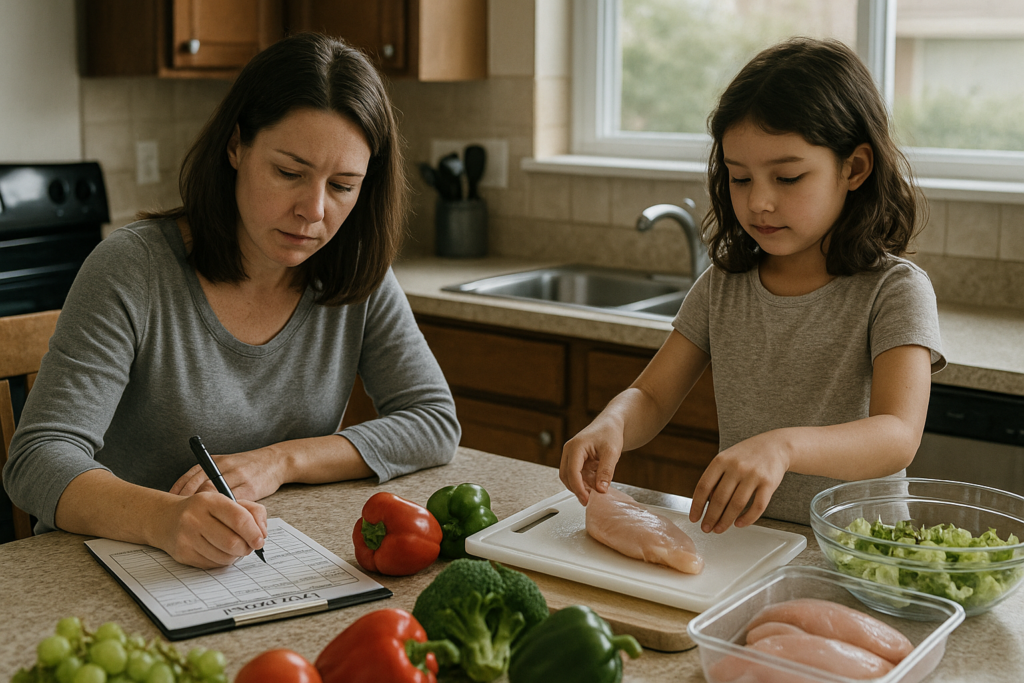
A new framework for family meal planning provides a practical, evergreen approach to preparing balanced meals while emphasizing fundamental food safety practices. The guide, designed to be adaptable, encourages households to integrate its principles with local regulations, individual circumstances, and professional health advice.
The core of the framework centers on planning meals that are both nutritious and safe to consume. This involves a multi-faceted approach that begins with the selection of ingredients and extends through preparation, cooking, and storage of leftovers. The objective is to create a sustainable system for families to consistently provide healthy and safe food.
A key component of the planning process involves ensuring that meals are balanced, incorporating a variety of food groups to meet nutritional needs. This aspect of meal preparation focuses on the composition of dishes, encouraging the inclusion of fruits, vegetables, lean proteins, and whole grains. By planning balanced meals, families can work towards meeting dietary recommendations and supporting overall health.
Beyond nutritional balance, the framework places significant emphasis on food safety. This includes directives on maintaining appropriate temperatures for perishable foods. “Keep cold foods cold” is a central tenet, advising that refrigerated items should be kept at or below 40 degrees Fahrenheit (4 degrees Celsius) to inhibit bacterial growth. Similarly, hot foods should be kept at or above 140 degrees Fahrenheit (60 degrees Celsius) until served.
Proper handling and storage of leftovers are also highlighted as critical food safety measures. The guide recommends labeling all stored food items with the date they were prepared or stored. This practice aids in tracking the freshness of food and ensures that items are consumed within a safe timeframe. Prompt refrigeration of leftovers, typically within two hours of cooking, is advised to minimize the risk of foodborne illness.
While the framework offers a general structure, it explicitly states that readers should adapt the checklist to local rules, conditions, budgets, and professional guidance where appropriate. This acknowledges that specific dietary needs, available resources, and regional food safety advisories may necessitate modifications to the general recommendations. For instance, local health department guidelines or advice from healthcare providers can offer tailored insights.
The framework is presented as a distinct resource, separate from daily or rotating information cycles, intended to provide a stable and reliable set of principles for family meal planning and food safety. Its evergreen nature suggests that the fundamental advice remains relevant over time, offering a consistent resource for households seeking to enhance their meal preparation habits.
By focusing on practical steps such as planning balanced meals, keeping cold foods cold, and labeling leftovers, families can establish a more robust system for food safety. The adaptability of the framework allows for personalization, ensuring that the advice is applicable to a wide range of household situations and dietary requirements within the Central Savannah River Area and beyond.