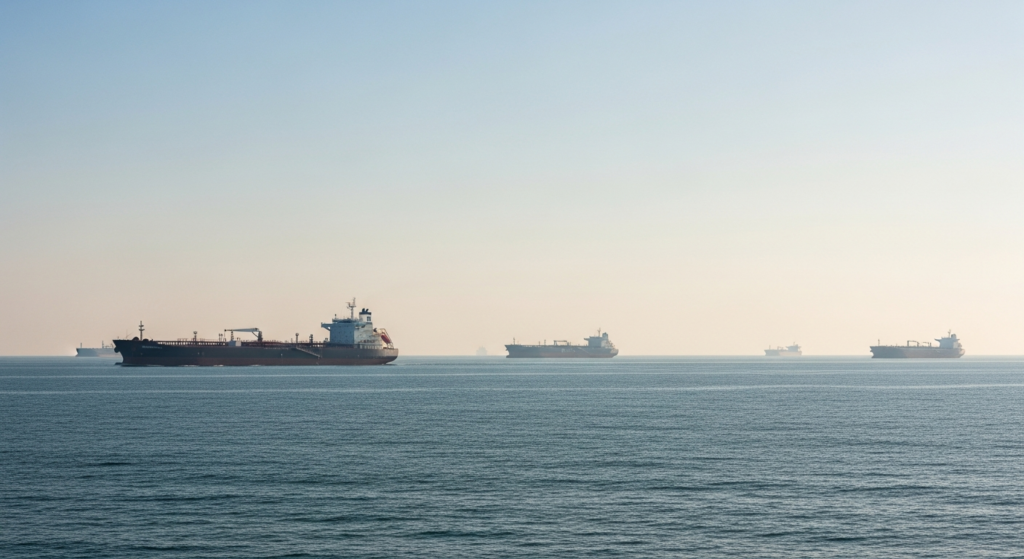
Renewed hostilities between the United States and Iran in the vicinity of Iranian ports and the Strait of Hormuz have triggered a sharp increase in global oil prices, according to independent international and business reports from the July 15 cycle. The escalation, which includes the reimposition of a U.S. blockade on Iranian ports, has reignited concerns about the stability of global crude oil flows through one of the world’s most vital maritime chokepoints.
The Strait of Hormuz, a narrow waterway connecting the Persian Gulf to the open ocean, is a critical artery for international energy markets. Approximately one-fifth of the world’s total petroleum consumption, and a substantial portion of its liquefied natural gas, passes through this strait daily. Any disruption or perceived threat to shipping in this area typically sends immediate tremors through global commodity markets, directly affecting crude oil prices.
This latest development follows a period of heightened tensions between Washington and Tehran, with the U.S. government under President Trump resuming a port blockade, a measure previously implemented to exert economic pressure on Iran. The re-escalation has been tied directly by energy-market analysts to the recent surge in oil prices, which have reportedly hit a one-month high. The uncertainty surrounding the Strait of Hormuz outlook, a direct consequence of the renewed confrontation, is now a primary driver in the upward trajectory of energy costs.
The implications of such geopolitical instability extend far beyond the immediate conflict zone. For consumers, higher crude oil prices translate directly into increased costs at the pump, affecting daily commutes and the overall household budget. Businesses, particularly those reliant on transportation and energy-intensive operations, face rising operational expenses. This can lead to increased prices for goods and services, contributing to broader inflationary pressures.
Globally, the energy market’s sensitivity to events in the Middle East underscores the interconnectedness of international affairs and local economies. The price of crude oil, a foundational commodity, influences everything from manufacturing costs to food production and shipping logistics. When a critical supply route like the Strait of Hormuz is jeopardized, the economic fallout is felt worldwide.
In the Central Savannah River Area (CSRA), including Aiken and its surrounding communities, the impact of rising energy costs can be substantial. Many residents commute across the region for work, and increased fuel prices directly affect their disposable income. The agricultural sector, a significant part of the regional economy, relies on fuel for machinery and transportation, meaning higher costs for farmers and, eventually, consumers.
Major employers in Aiken County, such as Savannah River Nuclear Solutions, Bridgestone Americas, and Kimberly-Clark, operate facilities that require consistent and affordable energy. While these large entities often have strategies to mitigate price fluctuations, a sustained surge in oil prices can still impact their bottom lines, potentially influencing investment decisions, operational costs, and ultimately, employment stability within the region. The University of South Carolina Aiken, a significant institution, also faces increased operational costs for transportation and utilities.
The current situation is being closely monitored by international observers, with coverage focusing on confirmed conflict, shipping security, and energy-risk context. Reports have carefully avoided unverified casualty, targeting, or tactical claims, emphasizing the economic and logistical ramifications of the renewed blockade and hostilities. The focus remains on the tangible effects on global trade and energy supply chains.
As the summer progresses, the trajectory of oil prices will remain a key indicator of the broader economic climate. The geopolitical tensions in the Strait of Hormuz serve as a stark reminder of how distant events can have immediate and tangible effects on daily life and economic stability in communities like Aiken.
Why it matters in Aiken
The renewed U.S.-Iran hostilities and the subsequent rise in global oil prices carry direct implications for the residents and economy of Aiken. With major employers like Savannah River Nuclear Solutions and Bridgestone Americas operating energy-intensive facilities, increased fuel and energy costs can translate into higher operational expenses for these critical regional job providers. Furthermore, the daily lives of Aiken residents are directly affected by rising gas prices, impacting household budgets and the cost of commuting along key corridors like Whiskey Road and Silver Bluff Road. The stability of global energy markets is a foundational element for the economic well-being of Aiken County, influencing everything from local commerce to the cost of public services and the overall affordability of living in the Central Savannah River Area.