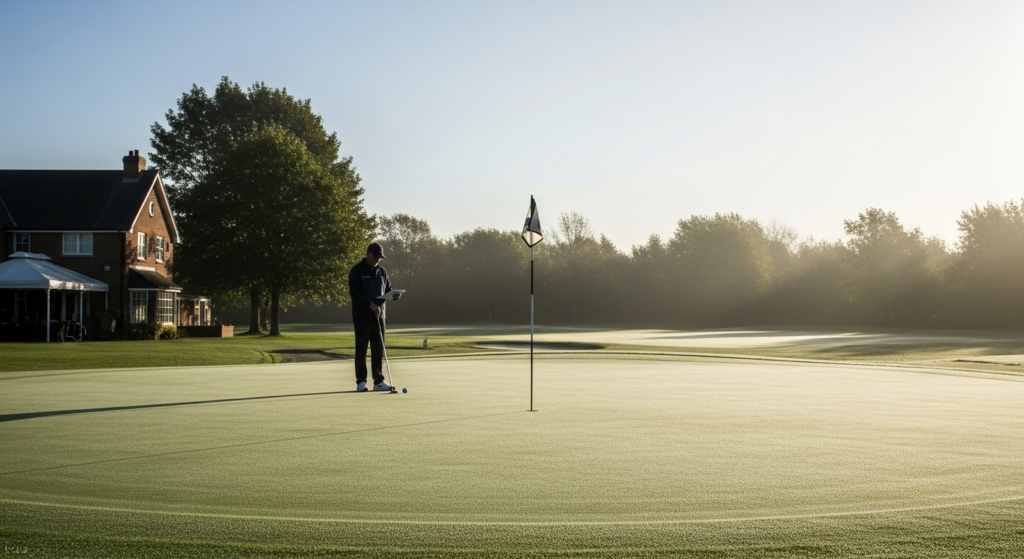
The Open Championship, one of golf’s most storied major tournaments, is underway at Royal Birkdale, presenting a unique set of challenges to the world’s top players. Beyond the leaderboard, a significant part of the major-week narrative often revolves around the intricate details of course conditions—factors like turf firmness, wind patterns, bunker strategies, and the impact of tee-time waves.
For golf enthusiasts in Aiken and the broader Central Savannah River Area (CSRA), understanding these elements offers a deeper appreciation for the professional game and provides a lens through which to view local golf experiences. The Royal Birkdale links course, known for its undulating terrain, deep pot bunkers, and exposure to coastal winds, demands a specific skillset and strategic approach from competitors. The firmness of the fairways and greens, influenced by recent weather and meticulous groundskeeping, dictates how shots will bounce and roll, often favoring players who can adapt their game to unpredictable lies and fast-running turf.
These considerations are not exclusive to major championships. While the scale and stakes differ, golf courses across Aiken County, from private clubs to public facilities, engage in continuous course management that addresses similar principles. The historic Palmetto Golf Club, founded in 1892 and recognized as the oldest golf course in South Carolina, exemplifies a long tradition of adapting to environmental factors. Its classic design, much like many links courses, requires players to think strategically about shot placement and recovery, especially when conditions are firm or windy.
Local course superintendents in Aiken face their own set of challenges, particularly during the region’s warm summer months. Managing turf health, maintaining consistent green speeds, and ensuring bunker integrity are ongoing tasks that influence playability. While Royal Birkdale’s fescue and bentgrass fairways present one type of challenge, Aiken’s courses often feature Bermuda grass, which reacts differently to heat, moisture, and traffic. Observing how professionals navigate varying conditions at The Open can highlight the universal principles of course architecture and agronomy.
Moreover, the concept of tee-time waves, where early or late starts might offer an advantage or disadvantage due to changing weather, is a common discussion point during major championships. This dynamic underscores how external factors can influence performance, a lesson that resonates with amateur players who experience the shifting conditions of a morning versus an afternoon round at courses around Aiken.
For those following The Open, paying attention to commentary regarding green speed, bunker sand consistency, and wind direction provides insight into the strategic decisions players and caddies make. This analytical approach to watching golf can enrich the experience, moving beyond just tracking scores to understanding the intricate dance between player skill, course design, and environmental variables. Junior golf programs and local amateur tournaments in Aiken also emphasize understanding course conditions as a fundamental part of developing a well-rounded game.
Why it matters in Aiken
The detailed analysis of course conditions at The Open Championship offers a valuable perspective for Aiken’s vibrant golf community. The principles of strategic play and meticulous course management, highlighted on a global stage, resonate deeply with local institutions like the Palmetto Golf Club. As the oldest golf course in South Carolina, Palmetto Golf Club embodies a legacy of adapting to and shaping its environment, providing a tangible local connection to the broader discussions of golf course architecture and agronomy. Understanding how turf firmness, wind, and bunker play influence outcomes at Royal Birkdale can deepen the appreciation for the daily efforts of groundskeepers and the strategic nuances required by golfers on Aiken’s own fairways, fostering a more informed and engaged local golfing culture.