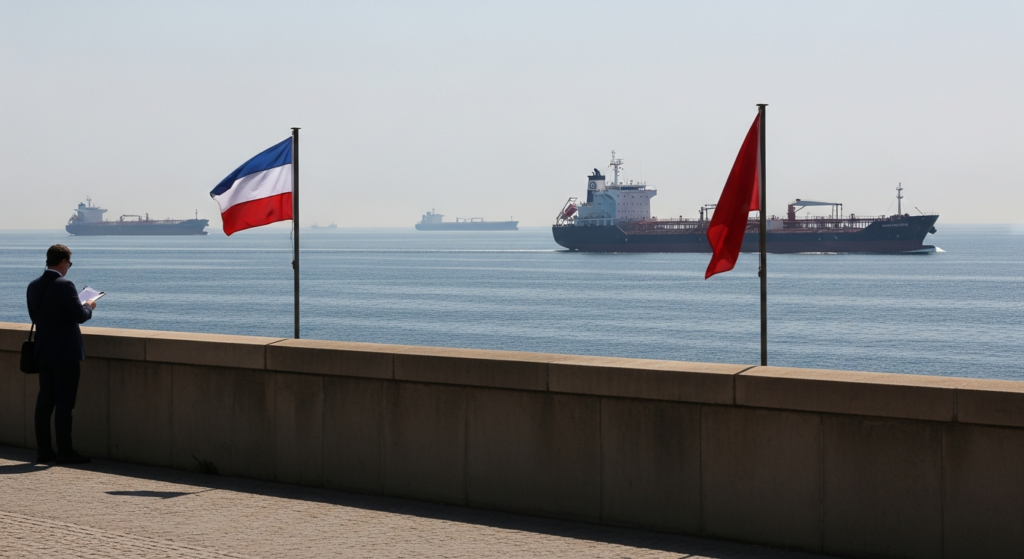
Renewed hostilities between the United States and Iran around Iranian ports and the strategically vital Strait of Hormuz have escalated, leading to a significant increase in global oil prices. The developments, which unfolded during the July 15 cycle, have reignited concerns about the security of a waterway central to the flow of global crude oil and its broader economic implications.
Independent international and business reports confirmed a resumption of U.S. actions, including a blockade, targeting Iranian ports. This escalation marks a significant turn in the long-standing tensions between the two nations, directly impacting maritime activities in one of the world’s most critical energy chokepoints. The Strait of Hormuz, a narrow passage connecting the Persian Gulf to the open ocean, is indispensable for the global energy supply chain. Approximately one-fifth of the world’s total oil consumption, along with a substantial portion of liquefied natural gas, transits through this strait daily. Major oil-producing nations, including Saudi Arabia, Iran, the United Arab Emirates, Kuwait, Iraq, and Qatar, rely heavily on this waterway for their crude oil exports.
Any disruption or increased perception of risk within the Strait of Hormuz typically triggers an immediate reaction in global energy markets. Following the recent escalation, energy-market reporting tied the renewed U.S.-Iran hostilities directly to higher oil prices. The price of crude oil reached a one-month high as concerns mounted over the potential for sustained interruptions to shipping and the overall stability of crude flows through the region. The re-imposition of a blockade by the United States near Iranian ports signals a heightened state of alert and operational risk for commercial vessels navigating these waters.
For the global economy, the implications of sustained higher oil prices are far-reaching. Increased crude oil costs translate directly into higher prices for refined petroleum products such as gasoline, diesel, and jet fuel. This ripple effect impacts transportation costs across various sectors, from commercial shipping and air freight to ground logistics. Businesses face elevated operational expenses, which can lead to increased costs for goods and services, potentially fueling inflationary pressures. Consumers, in turn, may experience reduced purchasing power as a larger portion of their income is allocated to fuel and energy, affecting discretionary spending and broader economic activity.
The current situation underscores the interconnectedness of global geopolitics and local economies. While the conflict unfolds thousands of miles away, its economic repercussions are felt worldwide, including in communities like Aiken. The stability of global energy markets is a critical factor in maintaining economic predictability, and any threat to that stability, particularly from a region as vital as the Persian Gulf, warrants close attention.
Why it matters in Aiken
The rising global oil prices stemming from U.S.-Iran tensions in the Strait of Hormuz have direct implications for Aiken and the surrounding Central Savannah River Area. Local residents commuting to major employers like Savannah River Nuclear Solutions or Aiken Regional Medical Centers will likely see increased costs at the pump, impacting household budgets. Businesses, including those in manufacturing like Bridgestone Americas and Kimberly-Clark, face higher operational costs for transportation and energy, which can influence pricing and profitability. The University of South Carolina Aiken, as a significant local institution, also experiences the effects of energy price fluctuations on its operational expenses. These global events underscore how international stability, particularly concerning critical energy routes, can directly affect the daily lives and economic landscape of communities in Aiken County.