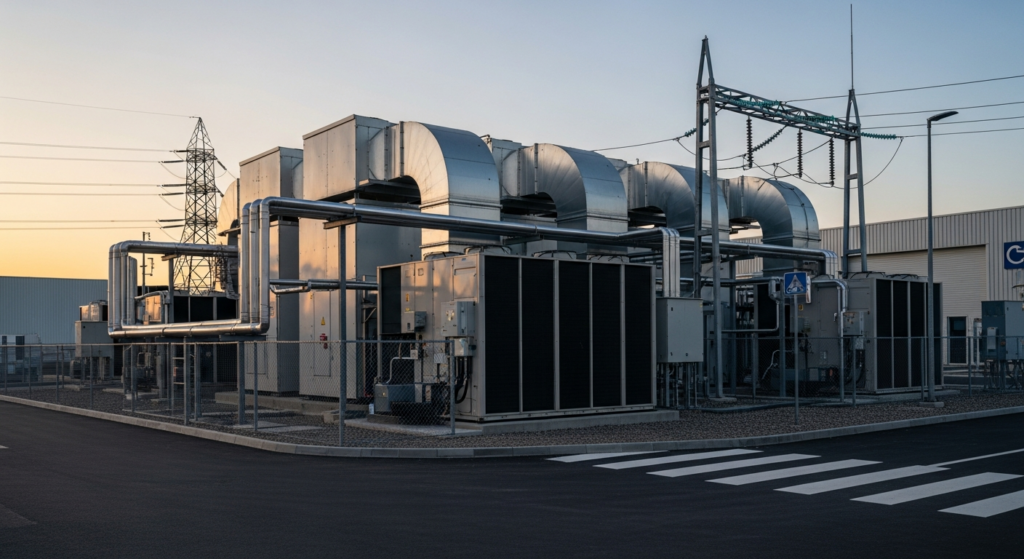
The technological landscape is experiencing a significant reorientation, with the primary bottleneck for artificial intelligence development no longer centered on advanced microchips but on the sheer power and data center capacity needed to operate these systems. This shift has placed energy planning and grid reliability at the forefront of business and technology discussions across the nation.
For months, industry analysts and utility providers have highlighted the escalating energy demands of AI data centers. These facilities, essential for training and running complex AI models, consume vast amounts of electricity, putting unprecedented strain on existing electrical grids. The focus has moved beyond the computational prowess of individual chips to the foundational infrastructure that powers them, including grid equipment and long-term energy supply strategies.
This evolving challenge necessitates comprehensive planning from power companies and local governments to ensure grid stability and support future technological growth. The implications extend to capital allocation decisions within the tech sector, as investments increasingly flow into energy infrastructure and data center construction rather than solely into chip manufacturing.
In Aiken and the broader Central Savannah River Area (CSRA), these national trends resonate with the region’s established identity as a hub for energy and industrial operations. The Savannah River Site (SRS), a cornerstone of the area’s economy and primary industry, is a federal facility with a deep history in nuclear energy and complex infrastructure management. While the site’s primary mission is distinct from commercial AI data centers, its presence underscores the region’s inherent connection to large-scale power generation and robust utility systems.
The demand for reliable and substantial power supply could influence future industrial development and infrastructure projects throughout Aiken County. Local officials, including Mayor Teddy Milner and County Council Chair Gary Bunker, are routinely involved in discussions regarding the city’s growth and the necessary infrastructure to support it. The long-term planning for utilities and energy resources in Aiken will be a critical component of navigating these national shifts.
Educational institutions such as the University of South Carolina Aiken and Aiken Technical College also play a role in preparing a workforce capable of supporting advanced technological and industrial needs. As the national dialogue emphasizes energy infrastructure, the skills required to manage and expand such systems become increasingly valuable.
This broader context of AI’s energy requirements highlights the strategic importance of regions with existing energy infrastructure and a capacity for industrial development. The shift underscores that while AI’s computational capabilities are revolutionary, their real-world deployment is fundamentally constrained by the physical limits of power generation and distribution.
### Why it matters in Aiken
The national pivot towards prioritizing power infrastructure for artificial intelligence development holds particular relevance for Aiken due to the city’s deep ties to the energy sector. The presence of the Savannah River Site, a major federal nuclear facility and one of the region’s largest employers, positions Aiken within a broader ecosystem of energy production and advanced industrial operations. While no specific AI data center projects have been announced for the area, the general strain on national power grids and the increased focus on robust energy planning could influence future utility investments and economic development strategies within Aiken County, potentially shaping how the region attracts and supports industries requiring substantial power resources.