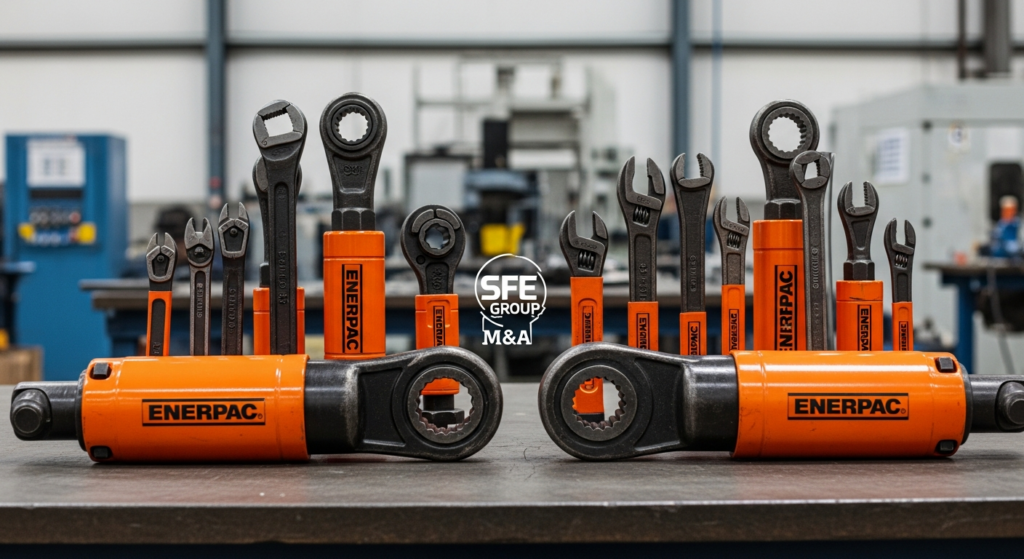
Enerpac Tool Group has agreed to acquire SFE Group in a transaction valued at approximately $472 million, a move that consolidates expertise within the industrial tools sector. The agreement, which has been detailed in financial and market coverage, positions Enerpac to expand its footprint in a critical segment of the global industrial economy.
The acquisition brings together two entities operating in the industrial tools and equipment market. Enerpac Tool Group, known for its high-pressure hydraulic tools and controlled force products, is expanding its portfolio by integrating SFE Group. The exact nature of SFE Group’s offerings aligns with the broader industrial tools sector, which provides essential equipment for manufacturing, construction, maintenance, and various heavy industry applications.
Industrial tools are foundational to the operations of many large-scale enterprises, from automotive manufacturing to energy infrastructure. The approximately $472 million valuation reflects the strategic importance of this sector and the potential for growth and synergy between the two companies.
### Why it matters in Aiken
The acquisition of SFE Group by Enerpac Tool Group, while a global transaction, holds relevance for the industrial landscape in Aiken and the broader Central Savannah River Area. The region is home to significant industrial operations, including major employers like Bridgestone Americas Tire Operations, Kimberly-Clark USA LLC, and Rolls-Royce Solutions America, all of which rely heavily on industrial tools and equipment for their manufacturing processes and facility maintenance. Furthermore, the Savannah River Site, a cornerstone of the Aiken economy, utilizes a vast array of specialized industrial tools in its complex federal contract work. Changes in the industrial tools market, such as those brought about by major acquisitions, can influence supply chains, product innovation, and pricing for the specialized equipment these local entities depend on. This development underscores the interconnectedness of global industrial markets with the operational realities of Aiken’s key economic drivers.