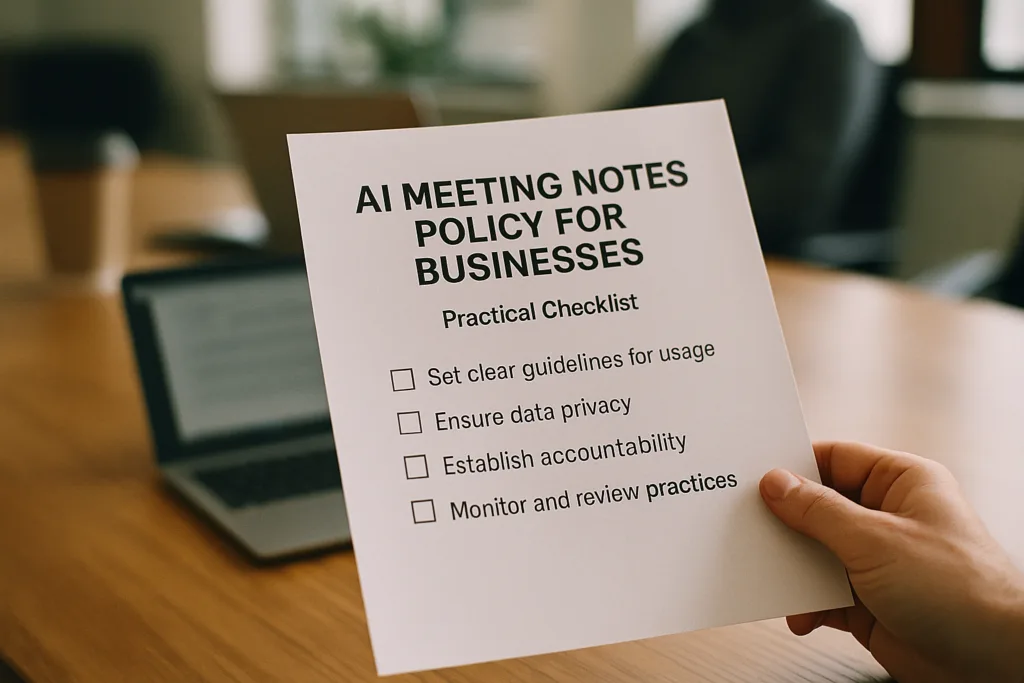
As artificial intelligence tools become more integrated into daily business operations, companies across the Central Savannah River Area are confronting the need for clear policies regarding the use of AI for meeting notes. These technologies, while offering efficiency, can inadvertently capture sensitive customer or personnel information, necessitating careful consideration of data privacy and access.
Businesses are advised to establish explicit guidelines on when recording meetings is permissible and who should have access to the AI-generated summaries. The potential for AI to record and transcribe conversations raises concerns about confidentiality, particularly in meetings involving proprietary information, client details, or internal personnel matters.
Experts emphasize that human review remains a critical step before any AI-generated meeting notes are used to inform decisions or disseminated as public statements. This oversight is crucial to ensure accuracy, context, and adherence to company policies and legal requirements. Without proper human validation, AI summaries could lead to misinterpretations or the unintended disclosure of sensitive data.
Companies are encouraged to develop protocols that include obtaining consent for recording, restricting the recording of highly sensitive meetings unless explicitly approved, and implementing a review process for all AI-generated summaries before they are acted upon or shared. Such measures are essential for maintaining trust with clients and employees and for mitigating the risks associated with the deployment of AI in business communications.