National meteorological and home planning experts have identified a timely July heat trigger, prompting homeowners and gardeners in Aiken and across the Central Savannah River Area to reassess their outdoor maintenance strategies. Safeguarding garden beds, container plants, and patio greenery becomes a critical task for maintaining plant health and vitality through the summer months.
The current forecast, characterized by a persistent heat dome, brings elevated temperatures and increased stress on vegetation. This atmospheric phenomenon traps hot air, leading to prolonged periods of intense heat that can quickly dehydrate plants, scorch foliage, and compromise root systems. For a region like Aiken, accustomed to warm summers, the intensity and duration of such events necessitate proactive measures beyond routine care.
### The Imperative of Deep and Timely Watering
One of the most crucial defenses against heat stress is proper watering. While frequent, shallow watering might seem intuitive, experts emphasize the importance of deep watering. This practice encourages roots to grow deeper into the soil, where moisture is more consistent and temperatures are cooler. Shallow watering, conversely, promotes surface root growth, leaving plants more vulnerable to rapid drying out.
For garden beds, a slow, steady application of water is ideal, allowing it to penetrate several inches into the soil. Drip irrigation systems or soaker hoses are highly effective, delivering water directly to the root zone with minimal evaporation. If using a sprinkler, ensure it runs long enough to saturate the soil deeply, rather than just wetting the surface. The best time for this is early morning, before the sun’s intensity increases, or late evening, after temperatures begin to drop. Watering during the hottest part of the day leads to significant water loss through evaporation and can even scorch wet leaves.
Container plants, due to their limited soil volume, are particularly susceptible to drying out quickly. They often require more frequent watering than plants in garden beds, sometimes twice a day during peak heat. Checking soil moisture by hand — feeling an inch or two below the surface — provides the most accurate assessment of when to water.
### Strategic Shade Provision
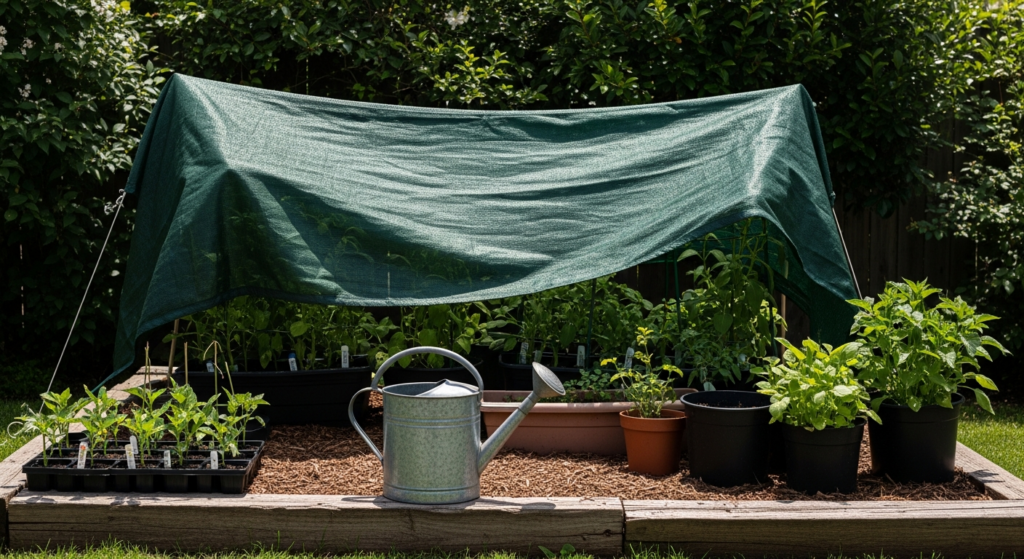
Direct, intense sunlight during a heat dome can be detrimental, even for sun-loving plants. Providing temporary or partial shade can significantly reduce heat stress. For garden beds, shade cloths are an effective solution. These lightweight fabrics can be draped over hoops or stakes, filtering a percentage of sunlight while still allowing air circulation. Available in various densities, they can block anywhere from 30% to 70% of sunlight, depending on the plant’s specific needs.
Natural shade from existing trees or structures can also be leveraged. Positioning sensitive plants in areas that receive afternoon shade can make a substantial difference. For patio plants, movable umbrellas or temporary awnings can offer immediate relief. The goal is to mitigate the harshest midday and afternoon sun exposure, typically between 10 a.m. and 4 p.m., when solar radiation is at its peak.
### The Protective Role of Mulch
Mulch acts as a vital protective layer for garden beds, offering multiple benefits during periods of extreme heat. A layer of organic mulch, such as wood chips, shredded bark, straw, or pine needles, helps to insulate the soil. This insulation keeps soil temperatures cooler by reflecting sunlight and reducing direct heat absorption. More importantly, mulch significantly reduces moisture evaporation from the soil surface, meaning plants require less frequent watering.
Beyond moisture retention and temperature regulation, mulch also suppresses weed growth. Weeds compete with desirable plants for water and nutrients, adding to the stress during a heat dome. A two- to four-inch layer of mulch is generally recommended, ensuring it does not pile up directly against plant stems, which can lead to rot or pest issues. Regular replenishment of mulch helps maintain its effectiveness throughout the summer.
### Managing Container Plants for Resilience
Container plants face unique challenges in a heat dome. Their confined root systems and exposure to ambient air temperatures on all sides make them prone to rapid temperature fluctuations and dehydration. Moving containers to shadier locations, such as under a covered patio, beneath a tree, or even indoors during the hottest hours, is a highly effective strategy.
The material of the container also plays a role. Dark-colored pots absorb more heat, transferring it to the soil and roots. Lighter-colored pots or those made from insulating materials like thick plastic or glazed ceramic can help keep roots cooler. Elevating pots slightly off hot surfaces, like concrete patios, can also improve air circulation and reduce heat transfer from the ground. Grouping containers together can create a microclimate, increasing humidity around the plants and providing some mutual shading.
### Optimizing Outdoor Work Times
Beyond plant care, the timing of outdoor work is crucial for the well-being of gardeners themselves. Avoiding strenuous activities during the hottest parts of the day is a fundamental safety measure. Experts recommend performing tasks like weeding, pruning, or planting in the early morning hours, typically before 9 a.m., or in the late evening, after 6 p.m.
Working during cooler periods not only reduces the risk of heat exhaustion and heatstroke for individuals but also minimizes additional stress on plants. Disturbing plants or soil during peak heat can exacerbate their struggle to cope with high temperatures. When working outdoors, staying hydrated by drinking plenty of water, wearing lightweight and light-colored clothing, and taking frequent breaks in the shade are essential practices.
### An Integrated Approach for Sustained Health
Successfully navigating a July heat dome in Aiken requires an integrated approach that combines these strategies. Regular observation of plants for signs of stress, such as wilting, yellowing leaves, or stunted growth, allows for timely intervention. Understanding the specific needs of different plant species — some are more drought-tolerant than others — also informs the application of these protective measures.
Preparing for such events before they arrive, through soil amendments that improve water retention, selecting heat-tolerant plant varieties, and establishing a robust watering schedule, can build resilience in the landscape. While the immediate focus is on survival during the current heat, these practices contribute to the long-term health and vibrancy of gardens and outdoor spaces throughout Aiken.
### Why it matters in Aiken
The impact of a prolonged July heat dome extends beyond individual garden plots, affecting the broader aesthetic and environmental health of Aiken. The city’s commitment to green spaces, from the historic landscapes of the Downtown / Historic District to the carefully maintained grounds of the University of South Carolina Aiken, relies on effective plant management during extreme weather. Maintaining healthy trees and shrubs contributes to urban cooling and air quality, benefiting all residents. Furthermore, the principles of heat-resilient gardening are vital for homeowners in neighborhoods like Woodside Plantation and Houndslake, where outdoor living and landscaping are central to the community’s character. Proactive measures help preserve property values and ensure that Aiken’s natural beauty remains a defining feature, even as summer temperatures climb. Local institutions like Aiken Regional Medical Centers also emphasize the importance of public health during extreme heat, reinforcing the need for residents to manage both their personal exposure and the health of their immediate environment.