
Aiken, South Carolina, August 21, 2025
Aiken
Aiken High School Football Schedule: Preseason Scrimmages, Practice Dates & Game-Day Map
This guide provides a comprehensive, practical overview of the Aiken High School football season logistics, including preseason scrimmages, official practice dates, game-day arrival protocols, parking and pedestrian routes, and a clear textual map of the stadium area. It is designed for players, families, volunteers, and visitors who want to plan ahead and experience game days with confidence.
Season Timeline at a Glance
The high school football calendar typically follows a predictable pattern: summer conditioning, official practice period, preseason scrimmages, regular-season games, and postseason play if qualified. Key dates are established by the school and the state athletic association; this guide breaks down how those segments look operationally so families and staff can organize travel, health forms, and volunteer shifts.
Preseason Scrimmages
Preseason scrimmages function as dress rehearsals and are usually scheduled in the two weeks prior to the regular season opener. Scrimmages are often open to the public and provide a low-pressure chance to evaluate depth charts and special teams play.
- Purpose: Real-time situational practice against another team, testing game-tempo substitutions and play-calling under more realistic conditions than practice.
- Typical Format: Short quarters, rotated rosters, and limited playbooks to emphasize fundamentals and safety.
- What to Expect: Reduced seating capacity near the team sidelines, adjusted concession availability, and temporary parking configurations depending on the host school.
Official Practice Dates & Structure
Official practice dates are determined in consultation with school administration and follow state rules for contact days, heat acclimation, and rest. Practices progress from conditioning to full-team installs and then situational work.
Typical weekly structure during the preseason:
- Monday: Team meeting, walkthroughs, positional drills, light conditioning.
- Tuesday: Full-pads practice or contact day when allowed; emphasis on technique and tackling fundamentals.
- Wednesday: Special teams installation and red-zone work, film session in evening.
- Thursday: Game-simulation practice and situational rep work.
- Friday: Walkthrough, injury prep, mental checklists; pregame meal logistics reviewed for away contests.
- Saturday: Optional conditioning sessions or recovery swim sessions; typically no pads.
- Sunday: Game day for teams with scheduled contests or rest and recovery day.
Required Player Paperwork & Preseason Checks
All players must complete health forms and eligibility paperwork prior to participating in full-contact practices. Administrative items generally include:
- Physical Exam: Annual physical form signed by a licensed provider, valid through the season.
- Parent Consent and Emergency Information: Current emergency contacts, medical insurance details, and consent for treatment.
- Concussion Education Acknowledgment: Documentation that athlete and parent have reviewed concussion protocols.
- Immunization and Health Screen: Any school-required health forms up to date.
Game-Day Arrival & Check-In Procedures
Arrival windows on game days are structured to ensure warm-ups, equipment checks, and player meetings are completed without rush. Recommended timelines:
- Home Games: Players should arrive at least 90 minutes before kickoff for locker room check-in and taping. Families and spectators are typically encouraged to arrive at least 60 minutes beforehand to find seats, set up permitted tailgating spots, and clear security screening lines.
- Away Games: Bus departure times are set to arrive with adequate pregame preparation time; carpools should follow the same arrival window recommended by the athletic department.
- Volunteer & Staff Check-In: Game managers, chain crew, and medical staff should confirm arrival times from the athletic scheduler but generally are expected 90 to 120 minutes prior to kickoff.
Stadium Map — Textual Guide to the Game-Day Landscape
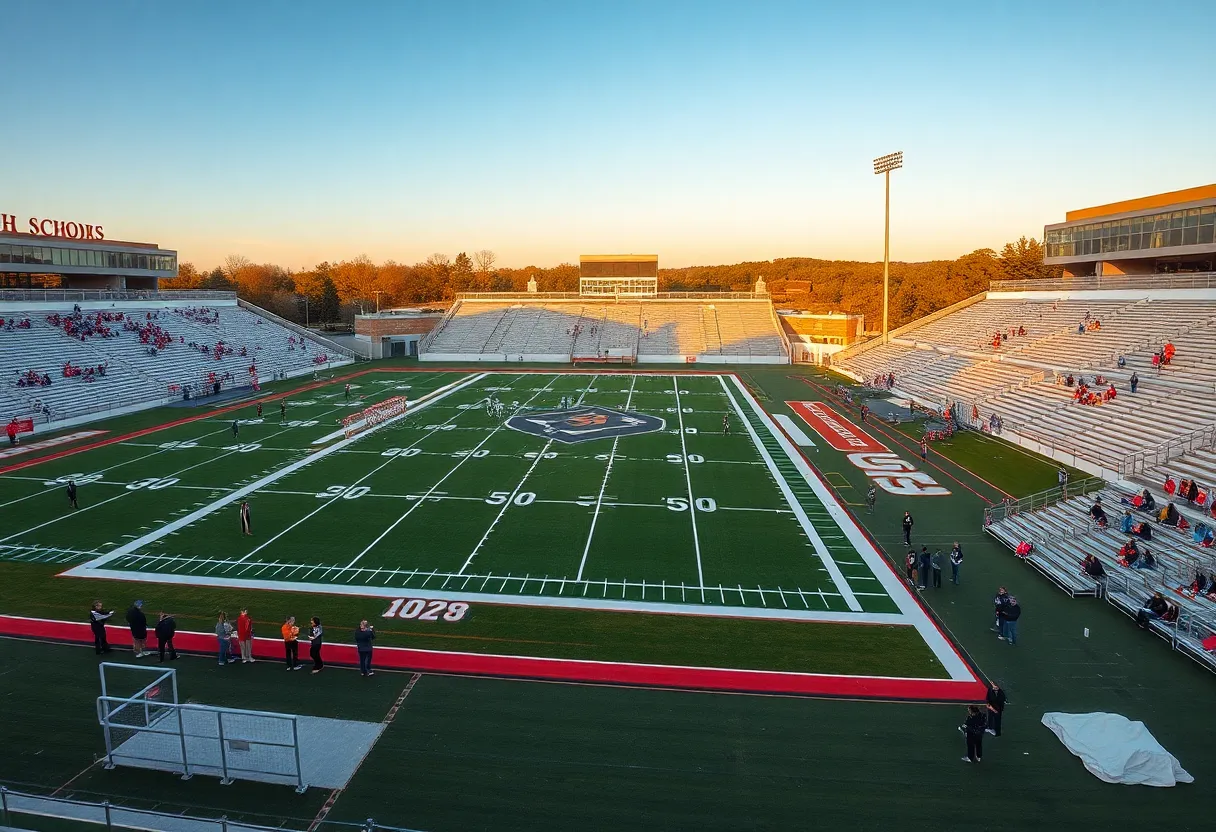
The following textual stadium map describes the zones around a typical high school stadium to assist with planning pedestrian flow, parking, and family meet-up locations. Replace references to specific gate letters or lot numbers with those printed by the school when available.
Field Orientation
The field runs north-south in most configurations. Visitor sidelines are on the east side of the field and home sidelines on the west. End zones face north and south. The press box is centered on the west grandstand near midfield.
Parking Zones
- Lot A (Primary Parking): Closest to the main gate and home stands. Reserved for staff, buses, and accessible parking. Arrive early for the most convenient spaces.
- Lot B (Overflow): Located south of the stadium; short walk to the main entrance via designated pedestrian crosswalk. Often used for general spectator parking on high-attendance nights.
- Lot C (Event & Tailgate): Open fields or designated lots used for supervised tailgating zones if permitted. Check event-specific rules for restrictions.
- Accessible Parking: Spaces close to gate are for credentialed vehicles and permit holders only; shuttle service sometimes offered from remote lots.
Gate & Entry Points
The stadium typically has a primary entrance for ticketed spectators and a secondary entrance for team and official access. Security screenings are conducted at each entry. Families with small children and those with accessibility needs are advised to use the main gate which has accessible ramps and a wider entry lane.
Concessions, Restrooms & First Aid
Concession stands are commonly located behind the home stands and near Lot B for remote access. Portable restroom locations are set based on expected attendance and can be adjusted for special events. A clearly marked first aid station is always present, usually adjacent to the visitor gate and the press box area.
Safety, Traffic & Crowd Management Tips
Game-day safety is a shared responsibility. Practical tips to reduce congestion and ensure smooth ingress/egress:
- Plan Your Route: Consult a map or route planner before leaving. Expect heavier traffic on county roads near the stadium and allow extra time.
- Use Designated Drop-off Points: Schools often provide a curbside drop-off near the main entrance for quick arrivals. Do not double-park or block crosswalks.
- Carpool & Shuttle: When offered, shuttle service from remote lots reduces congestion; coordinate carpool pick-up postgame to avoid backups at exits.
- Follow Posted Signage & Volunteer Directions: Parking attendants and safety volunteers are present to keep traffic flowing; obey temporary traffic patterns.
Accessibility & Special Needs Considerations
Accessible seating locations are typically near the top of the main stands or at field-level platforms depending on stadium design. Accessible parking spaces are provided close to the main entrance with ramped access to concourse levels. ADA-accessible restrooms should be exclusively marked; if you cannot find an accessible amenity, contact event staff or the first aid tent for assistance.
Volunteer Roles & How to Help
Volunteers are essential to a smooth game-day experience. Typical roles and approximate arrival expectations:
- Gate Attendants: 60 to 90 minutes before kickoff to staff ticket checks and wristband distribution for special events.
- Parking Attendants: 90 to 120 minutes before kickoff to set up cones and direct arriving traffic.
- Concession Staff: 60 to 90 minutes before kickoff to prepare food and supplies; volunteers rotate to maintain food safety.
- Chain Crew & Scoreboard Operators: Typically arrive 90 minutes early to set up equipment and perform safety checks on down markers.
Weather & Cancellation Policies
Weather can impact schedules for both practices and games. Lightning protocols require immediate suspension of activity and a minimum wait time after the last lightning strike is observed before resuming. Rain usually proceeds unless field safety is compromised. The decision to cancel or postpone is made by athletic directors in conjunction with local emergency management and is communicated through official school channels; check the school’s communication platform for final notices.
Media, Photography & Recording at Games
Photography for personal use is typically permitted from public seating areas. Tripods or professional equipment may require a press credential or prior approval from the athletic office. Recording for commercial or promotional use frequently requires prior approval; consult the athletic scheduler for credential policies.
Summary & Practical Checklist
To prepare for game day, use this short checklist:
- Confirm kickoff and arrival time
- Verify parking zone and accessible routes
- Complete all player health and consent forms
- Pack appropriate clothing for weather and extra water
- Coordinate a pick-up location for postgame
- Review volunteer arrival times if assisting
Frequently Asked Questions (FAQ)
When do preseason scrimmages typically occur?
Preseason scrimmages are usually held in the two weeks leading up to the regular season opener. Exact dates are set by the athletic department and are included in the season calendar distributed before summer break.
What paperwork is required before a player can practice?
Players must submit an up-to-date physical exam form, emergency contact information, concussion acknowledgment, and any school-specific health forms. Ensure immunizations and insurance details are current.
Where should spectators park for home games?
Spectators are generally directed to overflow Lot B for general parking, with Lot A reserved for staff and accessible parking. Arrive early for the best spots and follow volunteer directions.
Are there accessible seating and parking options?
Yes. Accessible parking spaces are provided close to the main entrance with ramp access to designated seating. Contact event staff at the main gate if you require assistance locating accessible amenities.
Can I tailgate on campus?
Tailgating policies vary by event and lot availability. Lot C is often used for supervised tailgating if allowed. Check the event guidelines for restrictions regarding open flames, amplified music, and clean-up requirements.
How are weather cancellations communicated?
Cancellation and postponement decisions are issued by the athletic office and distributed via the school’s official communication channels. Always check the school’s event page or direct contact channels for last-minute changes.
Are cameras allowed at games?
Personal cameras for family and fans are generally allowed from the spectator areas. Professional equipment may require prior approval and credentialing from the athletic department.
Season Schedule Summary
The table below provides a template-style schedule covering preseason scrimmages, first half of the regular season, and practice blocks. Replace placeholder opponents and locations with the official schedule from the athletic office for the current season.
| Date | Event Type | Opponent / Activity | Location | Kickoff / Start Time | Parking / Entry Notes |
|---|---|---|---|---|---|
| August 1 | Conditioning | Summer conditioning session | Practice Field | 6:00 PM | Use Lot B; arrive early |
| August 14 | Scrimmage | Preseason Scrimmage vs. Team A | Home Stadium | 7:00 PM | Primary gate; limited concessions |
| August 21 | Scrimmage | Final Tune-up vs. Team B | Away Stadium | 6:30 PM | Follow host parking map |
| August 28 | Regular Season | Season Opener vs. Rival | Home Stadium | 7:30 PM | Lots A & B; accessible parking at Lot A |
| September 5 | Regular Season | Week 2 @ Opponent | Away Stadium | 7:00 PM | Carpool recommended; bus arrival scheduled |
| September 12 | Regular Season | Week 3 vs. Opponent | Home Stadium | 7:30 PM | Tailgate area open in Lot C if permitted |
For any official changes to dates, times, or venue-specific regulations, consult the athletic office directly. Use this guide to streamline your preparations and ensure a positive experience on the gridiron and in the stands.

Author: STAFF HERE AIKEN
The AIKEN STAFF WRITER represents the experienced team at HEREAiken.com, your go-to source for actionable local news and information in Aiken, Aiken County, and beyond. Specializing in "news you can use," we cover essential topics like product reviews for personal and business needs, local business directories, politics, real estate trends, neighborhood insights, and state news affecting the area—with deep expertise drawn from years of dedicated reporting and strong community input, including local press releases and business updates. We deliver top reporting on high-value events such as the Aiken Horse Show, Aiken Bluegrass Festival, and polo matches at Whitney Field. Our coverage extends to key organizations like the Aiken Chamber of Commerce and the Aiken County Historical Museum, plus leading businesses in manufacturing and tourism that power the local economy such as Bridgestone and the Aiken County Visitors Center. As part of the broader HERE network, including HEREAiken.com, HEREBeaufort.com, HEREChapin.com, HERECharleston.com, HEREClinton.com, HEREColumbia.com, HEREGeorgetown.com, HEREGreenwood.com, HEREGreenville.com, HEREHiltonHead.com, HEREIrmo.com, HEREMyrtleBeach.com, HERENewberry.com, HERERockHill.com, and HERESpartanburg.com, we provide comprehensive, credible insights into South Carolina's dynamic landscape.