
Aiken, South Carolina, August 25, 2025
Aiken
Accessible Aiken Festivals 2025: Mobility Tips, Quiet Zones & Sensory-Friendly Picks
Aiken’s 2025 festival season promises lively streets, outdoor stages, artisan markets and family-friendly attractions. For visitors with mobility, sensory or communication needs, planning ahead can convert a potentially overwhelming day into an enjoyable, stress-free experience. This guide focuses on practical, actionable tips to help you navigate Aiken festivals with confidence: mobility planning, locating and using quiet zones, and choosing sensory-friendly programs and experiences.
Before You Go: Planning Essentials
Start early by collecting accessibility information from festival organizers and venue maps. Look for details on entry points, accessible parking and routes, restroom locations, first aid stations and areas designated for low sensory stimulation. When map details are limited, prepare by creating a personal plan that covers arrival, rest breaks, evacuation routes and backup transit options.
Pack a compact accessibility kit including spare mobility device batteries, a small toolkit for quick repairs, sunscreen, medication, a lightweight cushion for extended seating, and sensory aids such as ear defenders or noise-cancelling headphones. Carry identification and any necessary documentation for accessible parking permits or medical needs.
Arrival, Parking & Drop-Off
Aim to arrive before peak crowds. If you use an accessible parking placard, identify the nearest designated parking; these spaces are often on the perimeter of festival sites to allow for easier drop-off and shorter transfers. If permitted, plan a curbside drop-off at a marked entrance to minimize distance between vehicle and accessible routes.
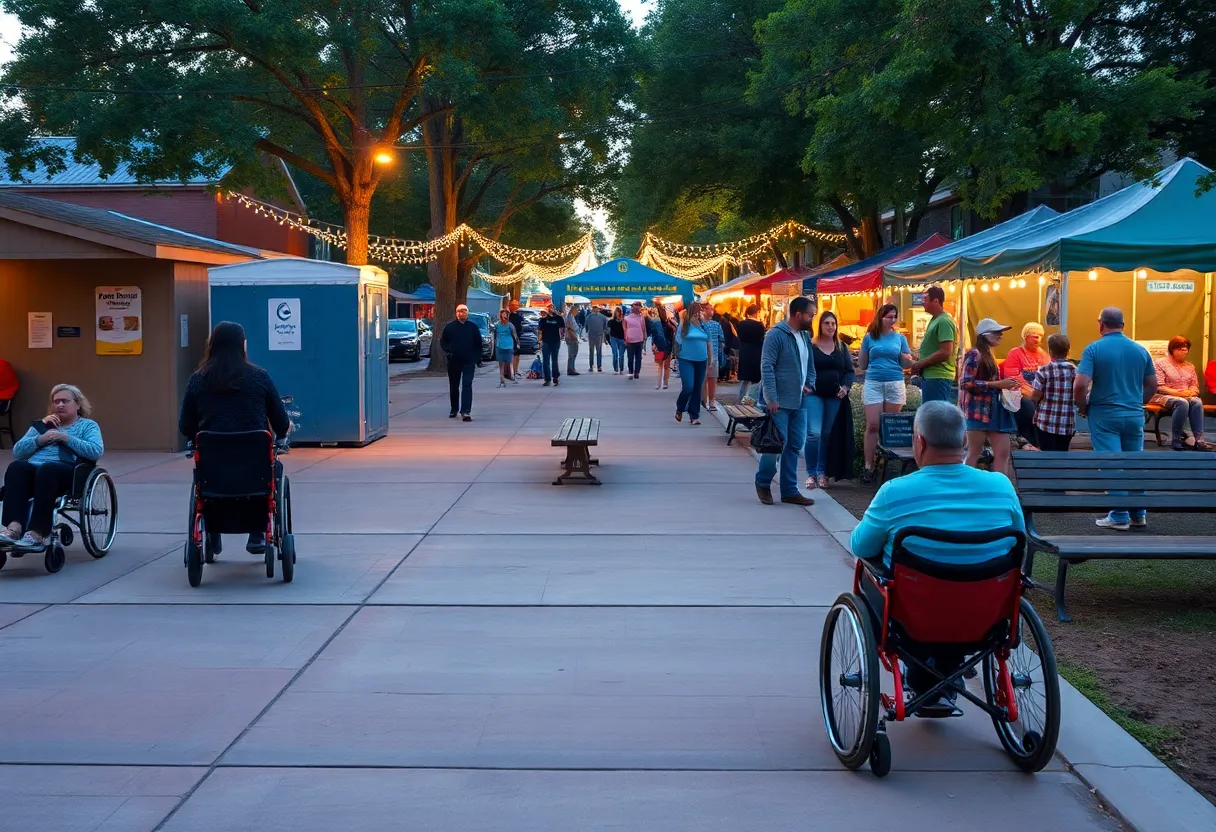
For those using mobility scooters or powered wheelchairs, check surface conditions along routes. Many festival venues use temporary flooring over grass or gravel; verify whether the festival provides matting or stabilized pathways. If pavement is interrupted, look for alternate paved routes or ask staff at an accessibility or information kiosk for assistance.
Onsite Mobility Tips
- Use official-access routes: Follow signs to accessible seating, ramps and viewing platforms rather than temporary shortcuts that may be uneven.
- Reserve accessible spots early: If the festival offers pre-bookable accessible viewing areas or seating, request these when purchasing tickets or contacting the festival access desk.
- Companion access: Many festivals permit companions or personal care attendants to accompany a visitor at no extra charge; confirm policy in advance.
- Portable ramps and help: If you require assistance boarding temporary stages, platforms or elevated areas, look for staffed access points that can provide portable ramps or coordination.
- Battery management: Carry spare batteries for mobility devices and a plan for recharging. Some festivals provide charging stations; locate these ahead of time.
Accessible Restrooms, Changing & Hygiene Facilities
Accessible restrooms are essential. Identify locations of ADA-compliant toilets and any family or gender-neutral changing spaces. If temporary units are used, check whether they include transfer space, grab bars and adequate door widths. When traveling with a child or adult who requires assistance, seek family restrooms or changing places with sufficient room for two people plus equipment.
Quiet Zones & Sensory Retreats
A reliable festival access plan includes information on quiet zones or sensory retreat areas. Quiet zones are designated low-stimulus spaces for people who need a break from loud music, flashing lights and crowds. These areas typically have subdued lighting, soft seating or rugs, reduced sound levels and staff trained to provide calm support.
If a festival lacks an official quiet zone, identify quieter corners near administrative tents, shaded park benches, or smaller programming tents away from main stages. Use a prearranged signal or text with your group to coordinate a meet-up in these areas.
Sensory-Friendly Programming Picks
Many festivals now schedule sensory-friendly events such as early-morning performances with lower sound intensity, tactile art workshops, small-group guided tours and family hours with reduced lighting and sound. Look for festival listings labeled sensory-friendly or inquire about programming that intentionally reduces sensory load.
For families with children or adults who are sensitive to crowds, prioritize activities that allow structured participation, have clear start and end times, and provide seating or stationary positions. Art studios, story tents and hands-on craft zones often allow more control than open-stage performances.
Communication Access & Accessible Information
Seek out services that support communication access. These can include assistive listening systems, captioned video screens, event schedules in large-print or braille, tactile maps and staff trained in clear communication practices. Some festivals offer sign language interpretation; where that option exists, request it for specific performances or presentations you plan to attend.
Carry a communication card if you prefer to share access needs non-verbally. Use smartphone accessibility features such as voice-to-text or live captions to bridge gaps. Confirm the location of help desks where staff can provide printed maps or point out quiet routes and services.
Service Animals & Support Persons
Service animals are generally permitted at public events; however, plan for relief and hydration areas. Identify shaded spots near secure grassy areas where service animals can take a break. Carry cleanup supplies and ensure your animal’s harness or identification is visible to reduce questions.
Health, First Aid & Emergency Considerations
Know where first aid stations and medical tents are located. Some festivals provide quiet recovery rooms separate from high-traffic medical areas to support visitors experiencing sensory overload or panic. Ask about access to low-sensory first aid, and confirm whether staff at medical tents are trained to accommodate visitors with disabilities.
Review emergency evacuation routes beforehand. If you require assistance during an evacuation, register with the festival’s access desk or onsite information tent so staff can note your needs and location. Plan a buddy system or designate a meeting point should you become separated.
Practical Tips for Caregivers & Families
- Arrange staggered visiting times to avoid peak crowd moments when possible.
- Schedule regular breaks and build in shaded, seated rest periods.
- Bring familiar sensory items to ease transitions—small fidget toys, weighted lap pads, noise-cancelling headphones.
- Have a visual itinerary with icons representing activities to provide predictability.
- Share a phone number and a visible contact card with group members in case of separation.
Technology, Apps & Accessibility Tools
Use smartphone maps and accessibility apps to plan accessible routes and check-in with live transit or shuttle services. Download large-print or screen-reader-friendly versions of event schedules when available. Portable chargers are essential for keeping accessibility features functional throughout the day.
Advocacy & Preparation for Future Improvements
Provide constructive feedback to festival organizers about your experience. Offer specific observations on route surfacing, signage legibility, staff training needs, and quiet zone placement. Practical, solution-oriented feedback helps shape more welcoming events in subsequent years.
Checklist: Day-of Essentials
- Accessible parking permit or prearranged drop-off plan
- Mobility device batteries and toolkit
- Sensory kit: ear protection, sunglasses, comfort item
- Plan for quiet breaks and alternate routes
- IDs, medication, contact card and emergency plan
- Portable charger and water bottle
Final Notes
Attending festivals in Aiken can be a richly rewarding experience when accessibility needs are anticipated and respected. Whether you are looking for low-stimulus sensory-friendly programming, stabilized routes for mobility devices, or clearly signed quiet zones, a combination of pre-planning, on-the-ground awareness and clear communication with festival staff will maximize comfort and enjoyment. Use this guide as a starting point and adapt the recommendations to your personal needs to make the most of Aiken’s 2025 festival season.
Frequently Asked Questions
How can I find out if a festival has accessible parking and drop-off?
Check the festival’s accessibility or visitor information page and the site map for marked accessible parking. If details are not available, contact the festival information desk ahead of time and request specifics about accessible drop-off points and enter/exit routes.
Are temporary festival surfaces suitable for wheelchairs and scooters?
Surface quality varies. Look for festivals that install stabilized pathways or matting over grass and gravel. If unsure, ask staff about alternative paved routes or request assistance to navigate uneven sections.
What is a quiet zone and how do I locate one at a festival?
A quiet zone is a designated low-stimulus space for rest and decompression. Locate these on festival maps, ask at information booths, or identify quieter tents and shaded areas away from main stages if no official zone is provided.
Can I bring a companion or personal care assistant to a festival?
Many festivals allow companions or support persons to accompany attendees with disabilities. Confirm companion policies when reserving tickets or contacting the festival access desk to ensure no extra fees are required.
What should I include in a sensory kit for a festival day?
Pack ear defenders or noise-cancelling headphones, sunglasses, a comfort object, a small fidget, hydration, snacks, any calming scents or tactile items that help reduce anxiety, and copies of important medical or contact information.
How do I request accommodations like assistive listening or captioning?
Contact the festival’s access desk or customer service in advance. Provide details about the specific performance or time you need accommodations for and ask about procedures for reserving assistive devices or ensuring captioning and interpretation services.
Quick Accessibility Reference Table
| Feature | What It Means | How to Access / Ask For It |
|---|---|---|
| Accessible Parking | Marked parking spaces close to entrances for permit holders. | Locate on site map; arrive early; display placard. |
| Accessible Routes | Ramps, stabilized paths and curb cuts suitable for mobility devices. | Follow designated signage; ask information booth for the smoothest path. |
| Quiet Zone | Low-stimulus space for rest and decompression. | Find on the festival map or ask staff for the designated area. |
| Assistive Listening | Devices that amplify or transmit sound to hearing aids. | Request via access desk or box office before the performance. |
| Accessible Restroom | Toilets with transfer space, grab bars and wide doors. | Check maps; locate family restrooms for additional space when needed. |
| Sensory-Friendly Programming | Events with reduced sound, lighting and controlled crowd sizes. | Look for program tags or contact the festival access desk for schedules. |

Author: STAFF HERE AIKEN
The AIKEN STAFF WRITER represents the experienced team at HEREAiken.com, your go-to source for actionable local news and information in Aiken, Aiken County, and beyond. Specializing in "news you can use," we cover essential topics like product reviews for personal and business needs, local business directories, politics, real estate trends, neighborhood insights, and state news affecting the area—with deep expertise drawn from years of dedicated reporting and strong community input, including local press releases and business updates. We deliver top reporting on high-value events such as the Aiken Horse Show, Aiken Bluegrass Festival, and polo matches at Whitney Field. Our coverage extends to key organizations like the Aiken Chamber of Commerce and the Aiken County Historical Museum, plus leading businesses in manufacturing and tourism that power the local economy such as Bridgestone and the Aiken County Visitors Center. As part of the broader HERE network, including HEREAiken.com, HEREBeaufort.com, HEREChapin.com, HERECharleston.com, HEREClinton.com, HEREColumbia.com, HEREGeorgetown.com, HEREGreenwood.com, HEREGreenville.com, HEREHiltonHead.com, HEREIrmo.com, HEREMyrtleBeach.com, HERENewberry.com, HERERockHill.com, and HERESpartanburg.com, we provide comprehensive, credible insights into South Carolina's dynamic landscape.